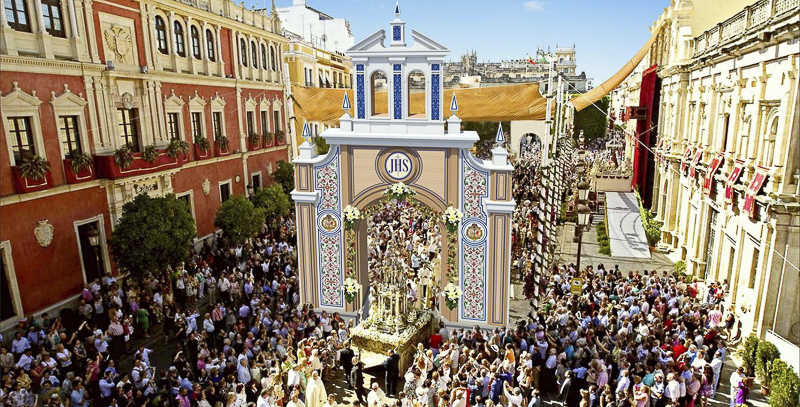
Celebration of the Corpus in Seville takes place over five days in June, from Wednesday through Sunday. The Vespers create an ideal atmosphere for enjoying the city.
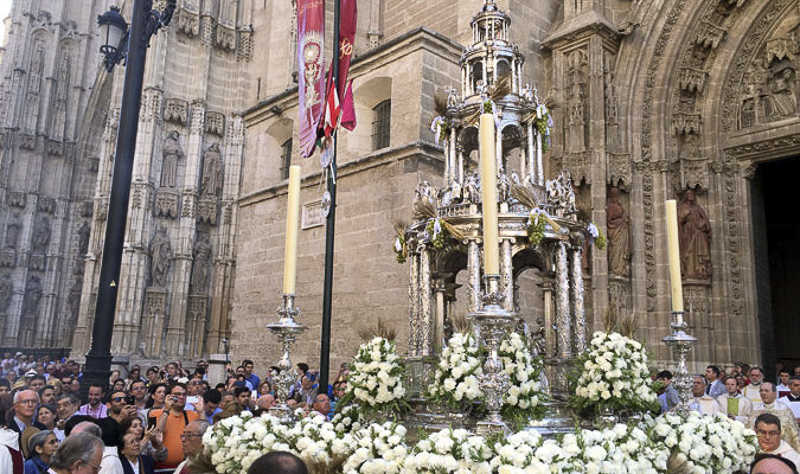
These days typically feature good weather and an animated atmosphere. It’s one of the city’s most important religious celebrations, deeply rooted in devotion, commemorating the Eucharist with a grand procession.
The procession includes numerous faithful representing different religious institutions, clergy, civil authorities, and military officials. Attendees are recommended to rent chairs along the procession route for a better experience.
The event is held on Thursday, a festive day that graces the route, where an altar with two commemorative arches is set up in Plaza de San Francisco.
Throughout the city, the streets, houses, and storefronts are adorned with various altars, shawls, and branches of rosemary. The previous day, the city center comes alive, where visitors can explore the cathedral in the afternoon for custody and various steps of the procession, as well as attend concerts or parades at different locations around the center.
Don’t miss the chance to stroll through the streets of the itinerary, especially Francos and Sierpes, to see the beautifully decorated altars, windows, and balconies.
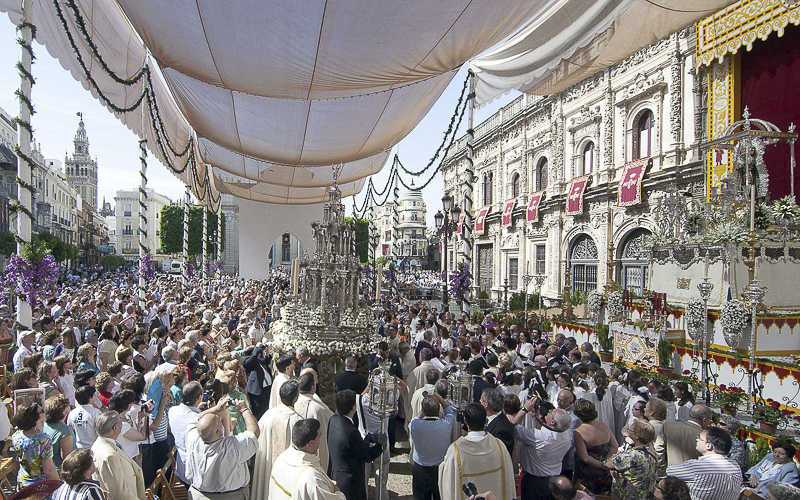
During the festivities, concerts are typically held in different squares and streets, accompanied by the sounds of bells ringing from the Giralda.
On the morning of Thursday at 6 am, the procession starts with the image of the Virgin of the Hiniesta, moving from the parish of San Julian (Macarena) to the altar at Plaza de San Francisco. The procession also includes the Last Supper, which travels from the church of the Third to the Archbishop’s Palace.
The Corpus procession in Seville gathers a large crowd, as people come together to enjoy this spectacular event, which lasts around three hours. Arriving early ensures less crowded views, particularly as the procession passes through custody.
Chairs for rent line the route, and access to the cathedral doors at Palos, San Miguel, and the snowdrops opens at 7:30 am. The procession begins at 8:30 am at the door of St. Michael’s Cathedral and continues along Avda. De la Constitución, Plaza de San Francisco, Sierpes Street, La Campana, Martin Villa, Cradle Street, Plaza de El Salvador, Villegas Street, Francos, Placentines, Plaza Virgen de los Reyes, before re-entering the Cathedral at 11:30 am.
The procession concludes with a parade of military troops from the local garrison. It starts with the script Sacramental of the Confraternity of the Blessed Sacrament, followed by:
- The brotherhoods and congregations of glory, in order of seniority.
- Steps of Santa Angela de la Cruz and the Santas Justa y Rufina, co-patronesses of Seville.
Accompanying these steps are the brotherhoods of penance, with the order determined by their Easter starting positions.
Next are the steps of San Isidoro and San Leandro, featuring silver images and the exquisite baby Jesus cast by Juan Martinez Montanes. Following them are representations of the Diocesan Seminary, third orders, regular clergy, and deacons.
The passage of San Fernando King is preceded by military commissions and the Banner of San Fernando, traditionally carried by the Military Governor. Following them are representations of the police, representatives of chambers and official colleges, His Excellency Ateneo de Sevilla, Royal Academy, University Corps Consular, and commissions from Provincial and Territorial hearings. There are also several military orders, the Board Superior of the General Council of Brotherhoods, and the Delegation of Catholic Diocesan Caritas and Action.
Additionally, the steps of the Immaculate Conception and the reliquary of the Holy Espina are included, accompanied by representatives from the Ecclesiastical Court of the secular clergy, the diocesan Curia, and the University of parish priests.
The choir of the Saint, Metropolitan and Patriarchal Cathedral of Seville, and eucharistic Sixes in red and white costumes add to the celebration. The Cathedral Chapter is also part of the Royal Cavalry of Seville, whose members attend in evening dress.
At the heart of the procession is the Blessed Sacrament, which is carried in the famous silver custodia of Arfe, led by twelve priests in white cassocks. Behind them is the Archbishop of Seville, accompanied by a deacon, sub-deacon, and an assistant dean. Finally, representatives of the Government of the City Council and the Provincial Council, along with members of the local police, follow.
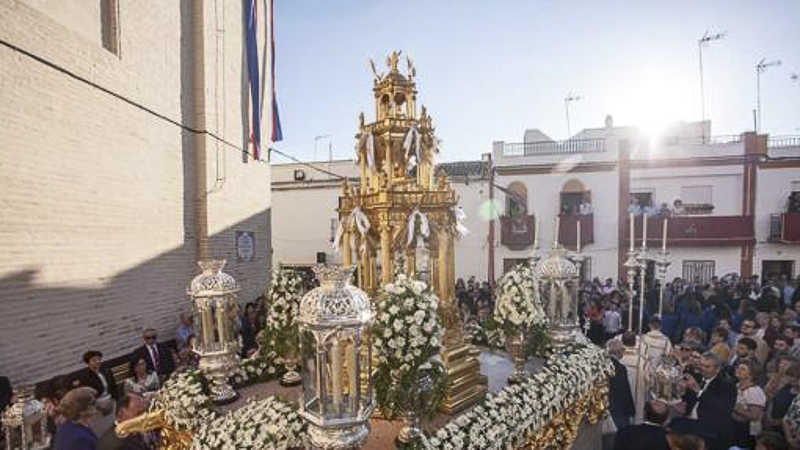
Closing the procession is a mixed military company from the Army and Air Force, complete with parades and music after the procession concludes.
In the afternoon, the Eighth of the Corpus features a celebration of the Word and Eucharistic adoration, paired with traditional dances around the Altar of the Cathedral.
You can attend performances in the evenings at the cathedral, particularly highlighting the dance of “Los Seises“—a traditional children’s dance group dressed in sixteenth-century costumes, performing songs from the same era. Their costumes are typically in vibrant red.
Later in the afternoon, the images that were part of the celebration return to their temples. Occasionally, a traditional Corpus bullfight is held at the Plaza de Toros de la Maestranza. Throughout the weekend, various cultural events, including concerts, are scheduled.
The Sunday Corpus in Seville
On this day, numerous processions take place in different neighborhoods of the city. While they are simpler than those celebrated in the Cathedral, many families carrying their children take part in communion, with some serving as “bearers” who carry Marian images from their parishes.
Among the most popular Corpus processions are:
-
The “Corpus Chico de Triana” at 10 am, which runs through the neighborhood from the parish of Santa Ana, with neighbors and balconies decked in altars to the Blessed Sacrament.
-
The procession from the Church of Santa Maria Magdalena at 9:30 am, noted for its sobriety, solemnity, elegance, and beautiful flow through the narrow streets and classic Sevillanas homes. The seventh-century custody and the passage of the Holy Name of Jesus stand out, especially as it moves through the Plaza of the Museum.
-
The procession from the Church of San Isidoro, which includes the custody accompanied by the Child Jesus and the Virgen de las Nieves, as it journeys through the old town district of Seville.
In addition, other processes under pallium are conducted from different parishes throughout the city, including:
- Parishes of San José Obrero and Santa Maria de las Flores in the Macarena district.
- Parishes of Concepción and San Carlos in Nervion.
- Parishes of Santa Justa, Rufina, and Santa Genoveva in an afternoon procession.
- Corpus Christi Parish in the southern district.
- Parishes of San Luis and San Fernando in the Cerro district.
- Parish of NªSra of the Sea in the Bermejales and Nª Srª of Major Pain in Bellavista.
There are also internal processions within parishes that make their way to the tabernacle, including those at the Cathedral’s Patio de los Naranjos, San Vicente, San Roque, San Juan de la Palma, and St. Barthelemy, along with processions within the convents of San Clemente Sisters of the Cross and Santa Paula.