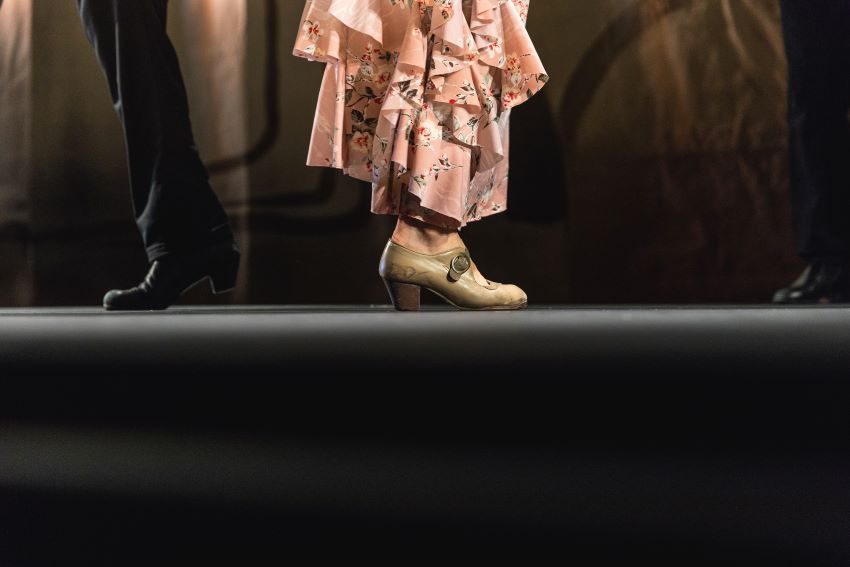
It’s called tablao flamenco, the type of site that offers shows related to flamenco. The heirs of the formerly known as coffees singers arose in the course of the decade of the 60’s. These temples of flamenco have played a crucial role in the recovery and maintenance of the flamenco art, which UNESCO considers an Intangible Cultural Heritage of Humanity.
There are numerous flamenco shows of great tradition preserved in Madrid, Córdoba, and various locations in Andalusia. However, only one city can be considered the capital of the tablao flamenco: Seville, the cradle of flamenco.
Origin and History of the Tablao Flamenco
The flamenco shows have their origin in the coffees singers of the Nineteenth century. Before their existence, flamenco shows were limited to private celebrations and parties. It was the cabarets that brought visibility to flamenco in front of a large audience.
The cabarets were very similar to current flamenco shows, composed of spacious rooms with tables and chairs for attendees and a large table in the center — the tablao — where the artists performed.
The cabarets helped to catalyze what would be known as the Golden Age of Flamenco between 1860 and 1919. This period saw a significant evolution in flamenco’s music, singing, and dancing. It was also the time during which important flamenco schools emerged in Jerez de la Frontera, Cadiz, and the Triana neighborhood of Seville. Flamenco ceased to be a minority art and became a universal one.
Between 1880 and 1920, many great flamenco singers arose, making the guitar a crucial musical accompaniment to the cante jondo.
By the late 50’s, Spain experienced an era of economic development, largely driven by a growing tourism that transformed various structures and facets of society. Flamenco was no exception and became a spearhead of national resurgence, with flamenco shows being rebranded from cabarets into a more visible expression of the unforgettable “Spain is different.”
Tourists became enamored with this art of great purity, making flamenco shows some of the most frequented venues for those looking to soak up Spanish culture.
It was in the 60’s that more great geniuses of flamenco emerged, including guitarist Paco de Lucia, dancers Matilde Coral and Farruco, and singers Enrique Morente and Camarón de la Isla. The latter was almost worshipped by flamenco lovers; his figure was nearly religious among enthusiasts.
The popularity of flamenco shows has never waned.
The Best Flamenco Shows in Seville
There are numerous flamenco shows in Seville where you can enjoy the best music and dance of this uniquely Andalusian and universal art. However, today we are only going to highlight two that we recommend visiting.
Tablao Flamenco Sevilla
One of the most charming flamenco shows in the city is located right next to the Cathedral of Seville. Here, you can enjoy the performance just a few meters away from the guitarists, singers, and dancers, immersing yourself in the flamenco art in all its intensity. An unforgettable experience.
Tablao Flamenco Álvarez Quintero
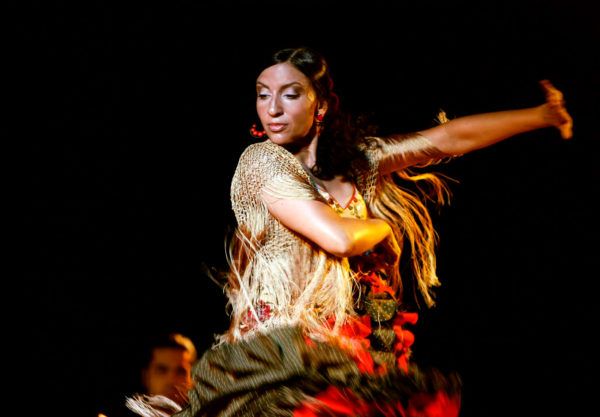
This original and authentic tablao flamenco is located in a beautiful eighteenth-century house at the foot of the mythical Giralda. It is a place to enjoy, be amazed, feel, and live flamenco in all its aspects: guitar, dance, and cante jondo. The show is full of tradition and sentiment, where artists bare their souls with passion.
How to Behave in a Tablao Flamenco
A tablao flamenco is neither a nightclub nor a funeral. You should enjoy the unparalleled spectacle with the necessary respect for the artists, who give their all during each performance — no fuss, but without boredom.
In a tablao flamenco, the audience is part of the show. Don’t hesitate to shout out an “olé” when you’re overwhelmed with emotion — it’s perfectly acceptable during the performance.
You won’t find a better show in Seville than a tablao flamenco, which offers an incomparable mixture of fun and culture of an art that, despite its local roots, has become universal. It remains a vivid representation of a country as “different” as Spain.