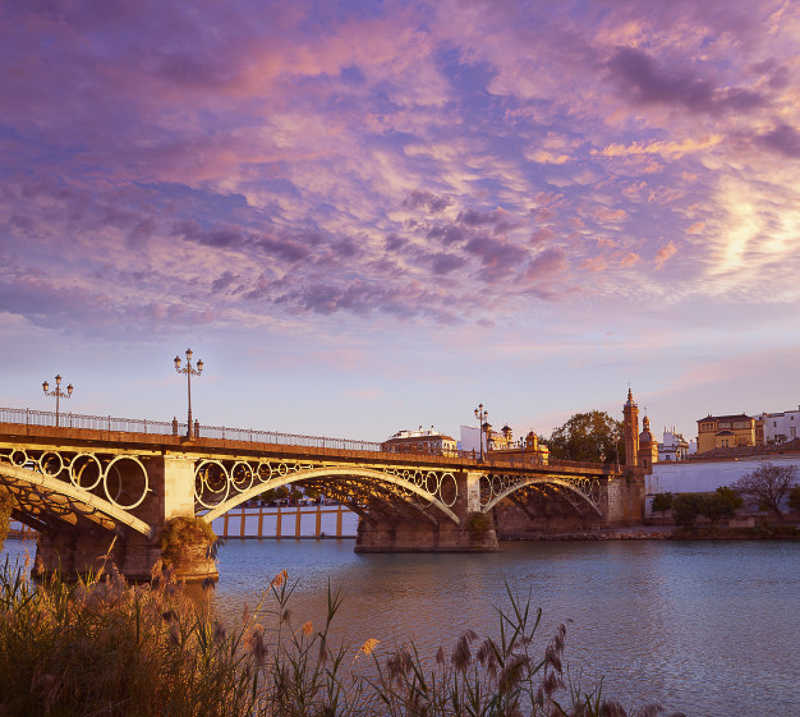
Barrio de Triana is one of the most visited areas of the city, cherished for its charm and culture that can be experienced next to the Guadalquivir River. Triana boasts numerous attractions, from its own handicrafts to the imposing presence of art museums housing pieces of great value and age.
A brief history of the Triana
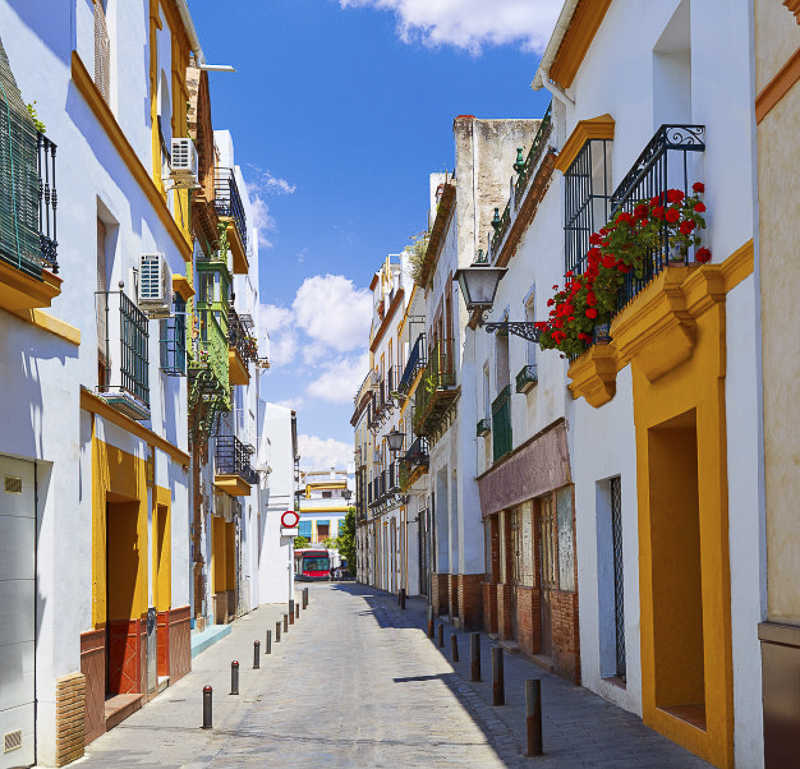
El Barrio de Triana began as a fishing quarter, where the local people engaged in pottery and fishing. Over time, its culture gained immense popularity. Barrio de Triana is known as the birthplace of some of the best bullfighters and flamenco artists in Spain.
The city’s history dates back to ancient times, with Roman remains discovered in the area. Evidence from the 18th century highlights the existence of Triana.
In 1171, the pontoon bridge was built during the reign of Caliph Abu Yaqub Yusuf. This bridge was destroyed by Ferdinand III of Castile’s army in 1248. The Barcas de Triana Bridge was the only way to supply the neighborhood’s population; hence, it was rebuilt and became the Castillo de San Jorge, where the first parish of Triana was established.
Sevilla has always been affected by its river, as the Guadalquivir River caused several floods in Triana. During these events, the population sought refuge in the Church of Santa Ana and San Jorge Castle.
The neighborhood was also struck by the plague in 1649, resulting in a significant decline in population. In 1780, a large Baroque building known as the “House of Columns” was erected, which was declared an asset of cultural interest in 1990.
The current Triana Bridge was constructed between 1845 and 1852, originally called “Puente de Isabel II,” replacing the Barcas Bridge. On San Jacinto Street, you can find remnants of the Trianera ceramic tradition at the Mensague house, inhabited by a family involved in the ceramic industry, dating back to 1900.
It is also believed that the pottery shop Santa Ana initiated the ceramics trade in the 20th century. The Corrales de Vecinos were abundant in the Barrio de Triana; these courtyards served as communal housing with central patios featuring fountains. The council has made reforms to preserve them.
What to see in the Triana district?
Have you ever wondered what to see in Triana? If so, you are in for a treat. This vibrant neighborhood offers a number of significant tourist attractions steeped in the history of Seville and Spain. Here are some must-see spots in the Barrio de Triana:
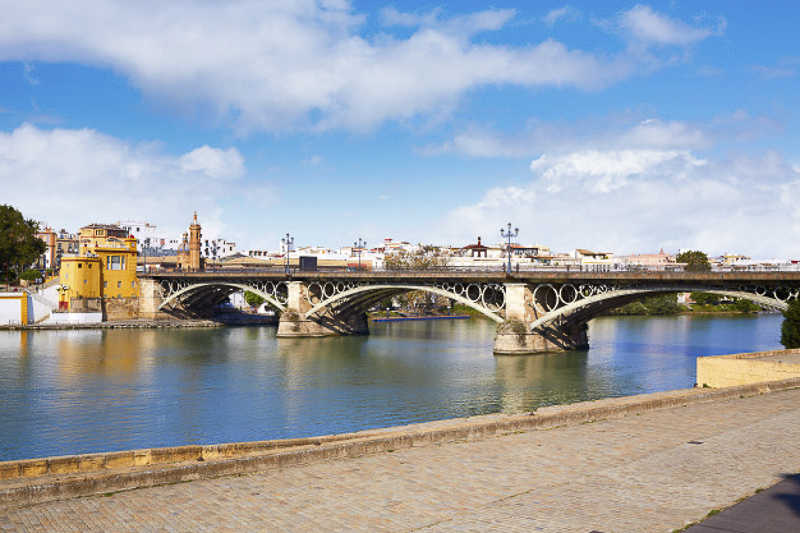
Puente de Triana
The Triana Bridge, built between 1845 and 1852 by engineers Ferdinand Bennetot and Gustavo Steinacher, is the most recognizable landmark in the Barrio de Triana. In 1976, an attempted demolition was thwarted, and the bridge has since been designated a National Historic Monument.
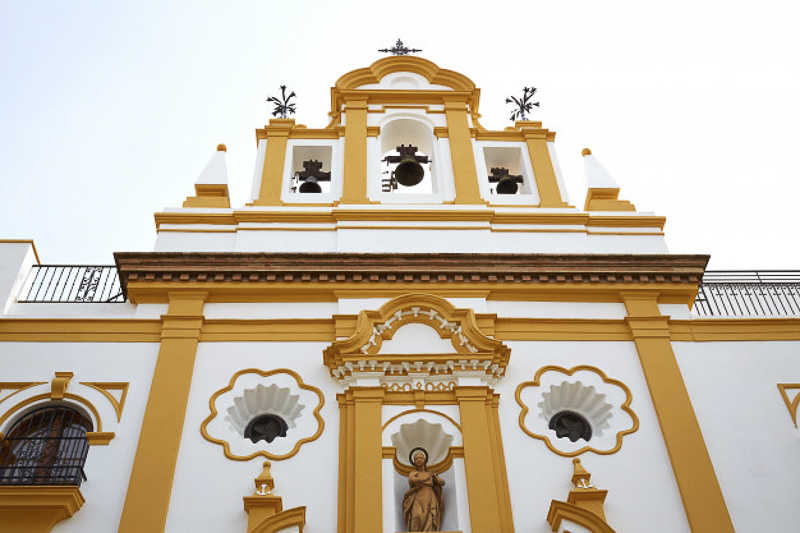
Chapel of the Carmen
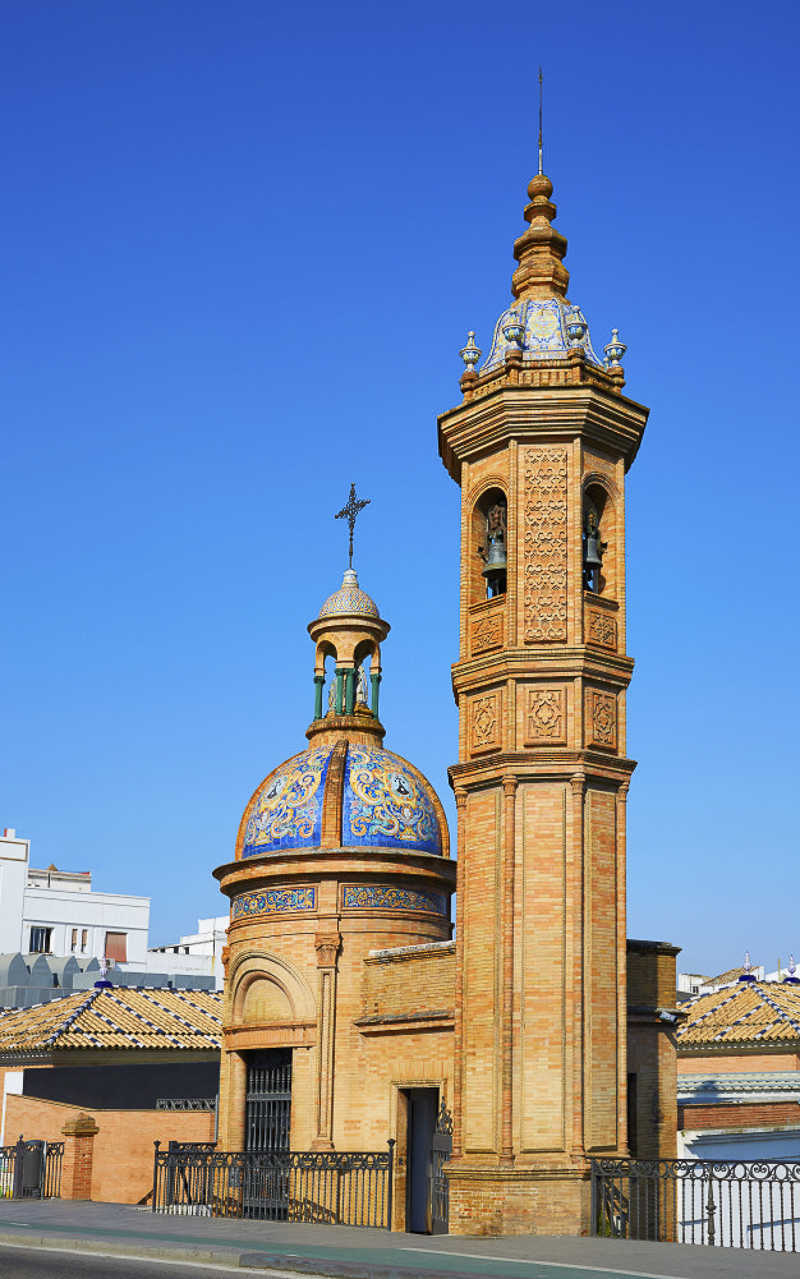
The Chapel of the Carmen, located adjacent to the bridge, features an altarpiece of the Virgin of the Carmen and was inaugurated in 1928. This small chapel on the west side of the Triana Bridge was designed by architect Aníbal González. The altarpiece was relocated to the parish of Santa Ana until the new chapel’s completion in 1928.

Altozano’s Square
Altozano Square marks the end of the Triana bridge and serves as a true reference point for the neighborhood. The architecture here hails from the early 20th century. The square, measuring approximately 330 meters in perimeter and 0.4 hectares, is a must-see if you have a day or two to explore Sevilla.
Triana’s Market
The Triana Market, situated in Altozano Square, features remnants of the Castillo de San Jorge. This market is where locals typically do their daily shopping. During its construction, remains of the castle and a Muslim almohade cemetery were discovered. It was inaugurated in 2001 as the Mercado de Triana.
Castillo de San Jorge
San Jorge Castle is found on the right bank of the Guadalquivir River. Originally constructed for various uses, it served as a prison during the Spanish Inquisition. The castle was demolished in the 19th century due to damage from floods. Today, it houses the Mercado de Triana, built using the castle’s structure.
The Alley of the Inquisition
The Alley of the Inquisition is a narrow passage approximately 35 meters long. It connects the walkway of Nuestra Señora de la O with the street along the Guadalquivir River.
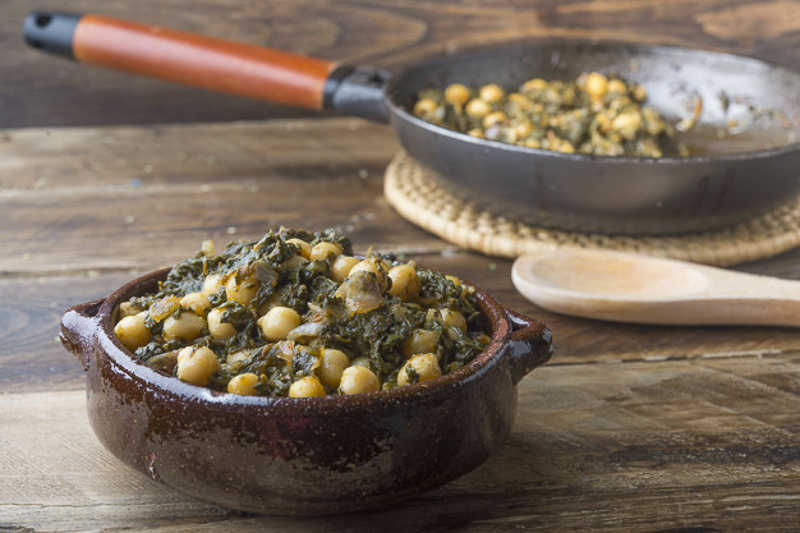

Where to eat tapas and go in the Triana district of Seville?
Tapas in Seville are a vital part of the local culture. Going out to the bars means more than just food or drink; it’s a way to connect with family and friends. It’s an opportunity for leisurely afternoons and evenings filled with delicious cuisine and lively conversations. It’s also a great way to meet new people—or even spark a romance! Here are some recommended tapas bars:
The Mary Trifulca
Located at the corner of Puente de Triana and Altozano Square, The Mary Trifulca opened in the summer of 2016. This establishment is steeped in history and romance, with carefully curated industrial décor. It attracts both locals and foreign visitors alike. With a five-story layout, it accommodates up to 120 people, serving a diverse menu of Triana’s typical dishes specifically designed for sharing. For reservations and information, call Maria Trifulca at: 0034 954 330 347.
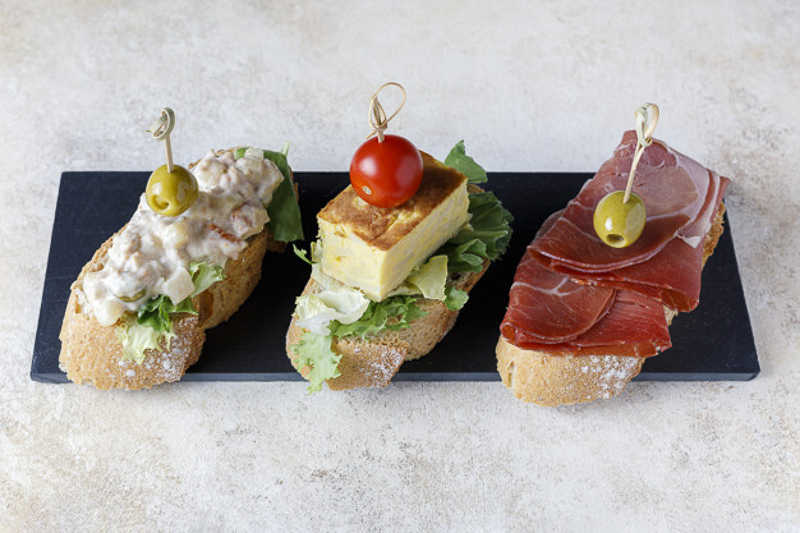
Variety of Spanish skewer
Victoria 8
Victoria 8 is located on the street of the same name in Barrio de Triana. This restaurant is suitable for groups and is housed in a typical old barnyard, making it a favorite among foreign visitors. Founded in 2007, Victoria 8 offers a mix of traditional and modern culinary delights, with lounges suitable for 14 people or more, as well as smaller rooms for a more intimate dining experience. For information and reservations, call Victoria 8 at: 0034 954 343 230.
Las Golondrinas
Another restaurant steeped in Triana’s tradition is Las Golondrinas, located at Calle Antillano Campos, 26. Established in 1962, its management has remained with Paco Arcas and his family, the current owners. Specializing in salad dressings, fried, and grilled dishes, the restaurant prides itself on tradition. The atmosphere features typical Andalusian table and chair setups, adding to its charm. For reservations and inquiries, call 0034 954 331 626. These three restaurants are just a few options in the Triana neighborhood; you can also find various fast-food joints, ice cream parlors, and more.