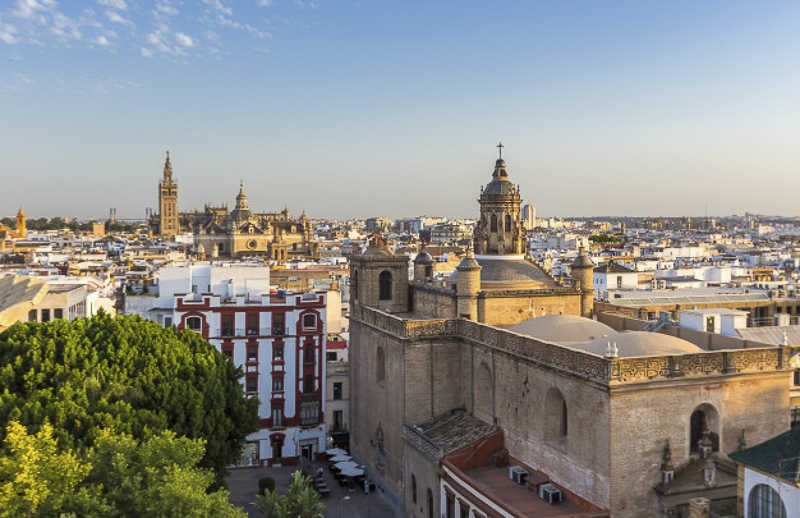
Explore the city of Seville in two days! It is possible thanks to the proximity of its monuments, which, along with its vibrant culture, are the highlights for tourists visiting the area.
Whether you opt for a professional guide or prefer exploring on your own, here’s a guide to help you get started.
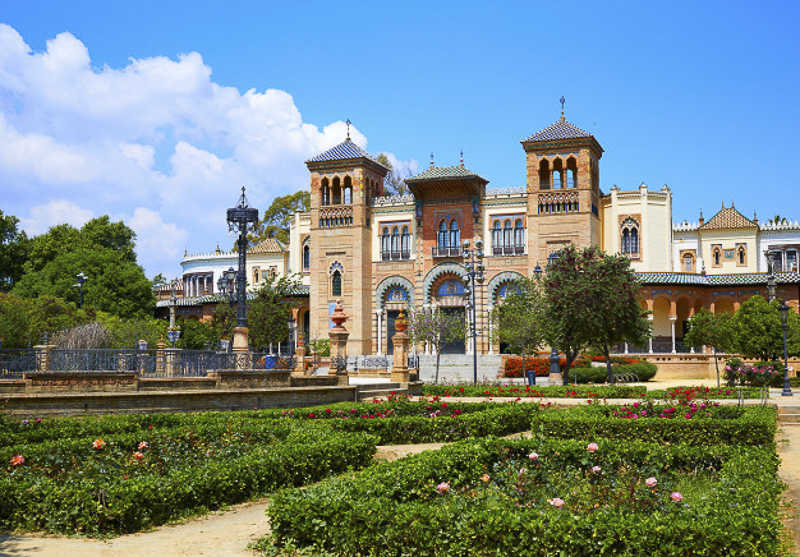
What to see in Seville in two days?
With so many historical monuments in Seville, it can be challenging to decide where to start. Here, we present the best options for your two-day itinerary, including an easy route that factors in the time needed for each site.
On the first day, make sure to visit the old town, where you can find the following monuments:
- Cathedral of Seville:
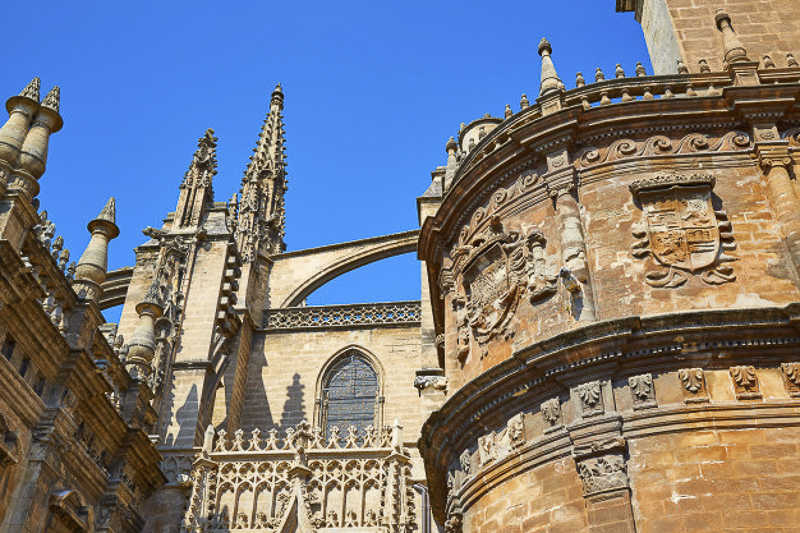
Seville Cathedral features a unique Gothic architectural style and is one of the largest churches in the world. It houses “La Giralda,” a bell tower built in the 12th century that stands 105 meters tall.
Designated a UNESCO World Heritage Site, the Cathedral’s chapel has a soaring ceiling height of 42 meters and combines Gothic and Baroque elements. Inside, you’ll find the “Altarpiece of the Capilla Mayor,” a wooden masterpiece depicting 42 scenes from the life of Jesus, the largest of its kind in Christendom.
With 15 uniquely designed doors adorned with intricate sculptures and reliefs, each entrance tells its own story.
Opening Hours:
Monday: 11:00 AM - 3:30 PM
Tuesday to Saturday: 11:00 AM - 5:00 PM
Sunday: 2:00 PM - 6:00 PM
Tickets:
Normal tickets cost €9. For access, take bus line C5 to Garcia Vinuesa and transfer to tram T1, continuing to the Archivo de Indias before walking to the Cathedral.
- Alcazar of Seville:
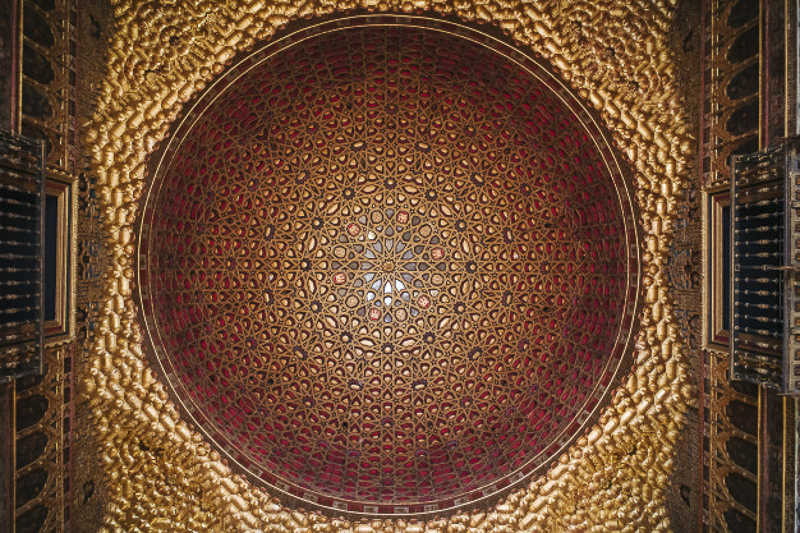
The Real Alcazar de Sevilla is the official residence of the Spanish Royal Family during their visits to Seville.
Known as the oldest royal palace in Europe, it was built in the Middle Ages and showcases a blend of Islamic, Gothic, Baroque, and Renaissance architectural styles. It was declared a World Heritage Site in 1987.
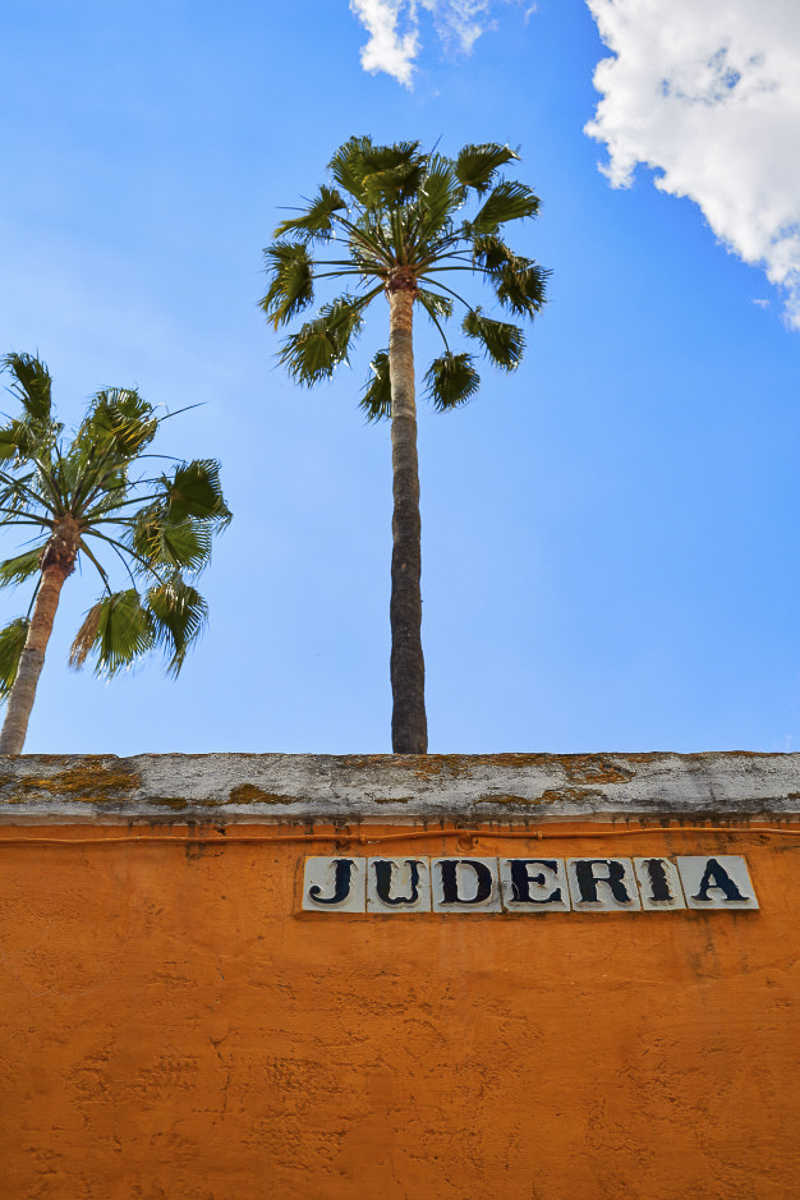
- Barrio Santa Cruz Seville:
The picturesque neighborhood of Santa Cruz is filled with historical monuments and is an ideal area for leisurely strolls.
Within this charming district, you’ll find Seville Cathedral, the Archive of the Indies, and the Alcázar, all significant stops on your journey.
- Metropol:
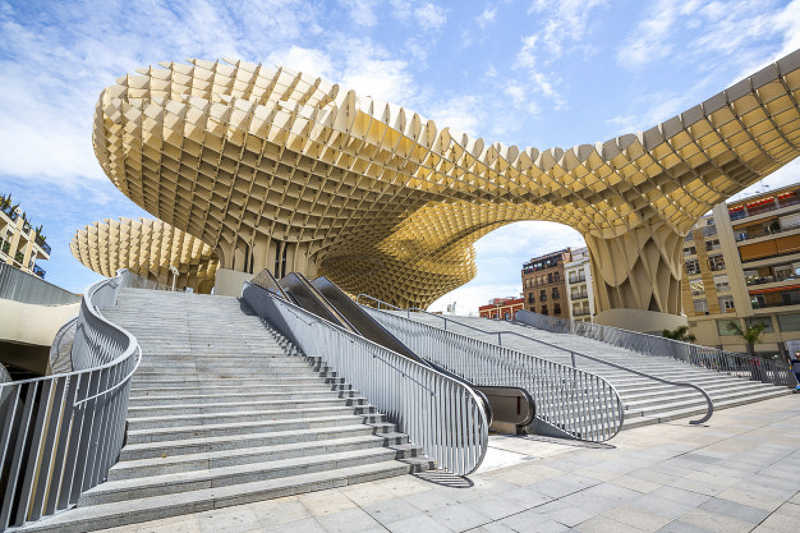
Locally known as the “Mushrooms of Seville,” Metropol Parasol is an innovative architectural project made of wood and concrete.
Located in the Plaza de la Encarnación, it boasts a pergola shape inspired by the domes of the Cathedral of Seville.
The site features a lookout point offering stunning views of the old town, as well as a traditional market and dining options below. Awarded best architectural project in 2013, it is recognized as an avant-garde design and was a finalist for the Mies van der Rohe Award by the European Union.
- Torre del Oro:
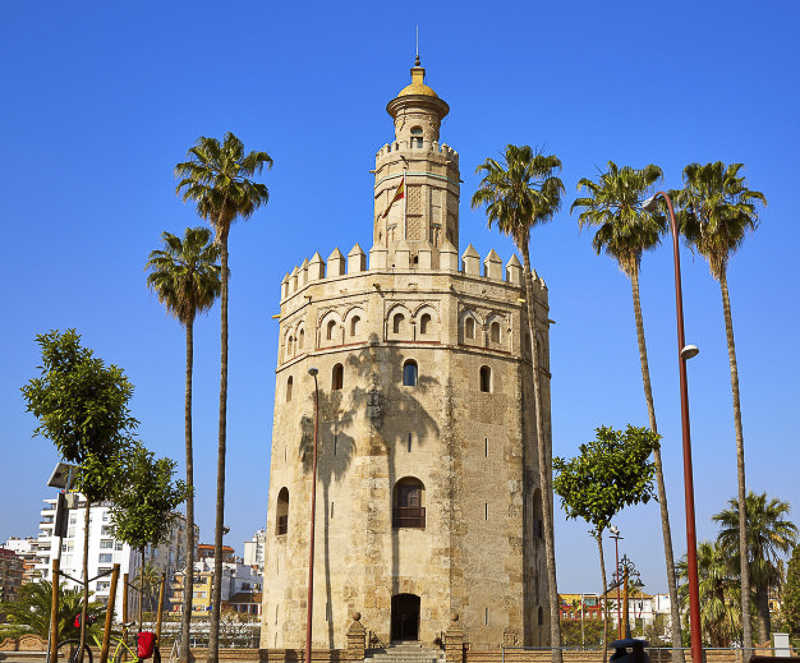
The Torre del Oro stands next to the Plaza de Toros de la Maestranza, reaching a height of 36 meters.
Often referred to as the “Tower of Gold,” it glimmers in the sunlight reflecting off the river. The structure comprises three distinct architectural bodies; two are dodecagonal, while the top body is circular, adorned with a golden dome.
Constructed in the 1760s by military engineer Sebastián Van der Borcht, it was declared a historic monument in 1931. The tower now houses the Naval Museum of Seville and remains in excellent condition.
- Barrio de Triana:
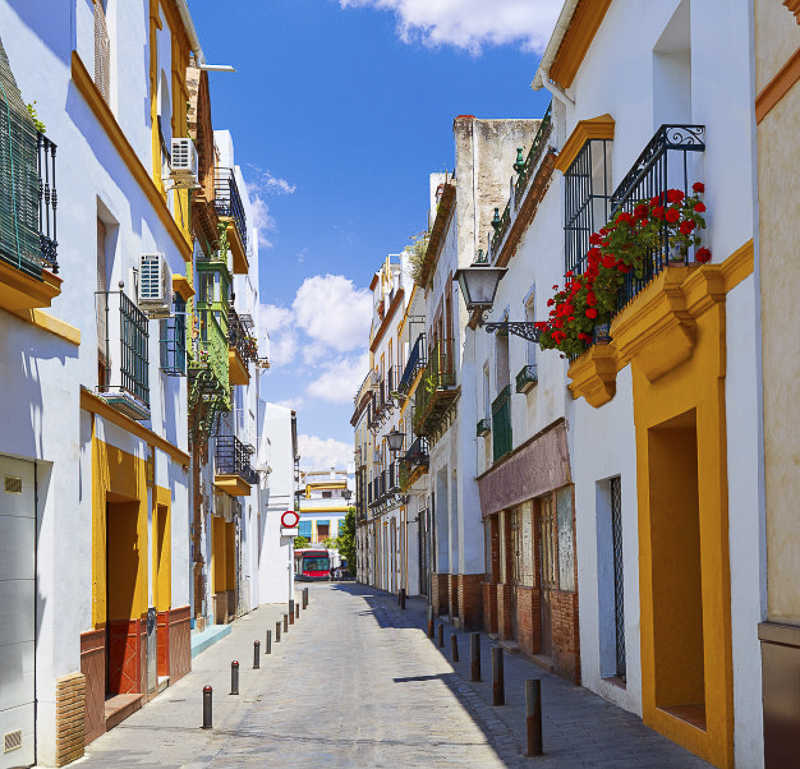
El Barrio de Triana (Triana’s Quarter) lies west of Seville and is accessible via the Triana Bridge, a National Historic Monument since 1976.
Renowned for its ceramics industry, Triana is famous for high-quality pottery crafted by local artisans.
What do the second day visiting Sevilla
After a restful first day of exploring, your second day can feature more spectacular locations of interest, including:
- Archive of the Indies:
The Archive of the Indies in Seville houses invaluable documents regarding Spain’s overseas territories and the conquests of the Spanish crown.
Founded in 1785, it serves as a central hub for historical documentation of great expeditions. Ordered by King Carlos III, the archive holds around 43,000 legacies made up of 80 million pages and 800 maps and drawings. It was declared a UNESCO World Heritage Site in 1987.
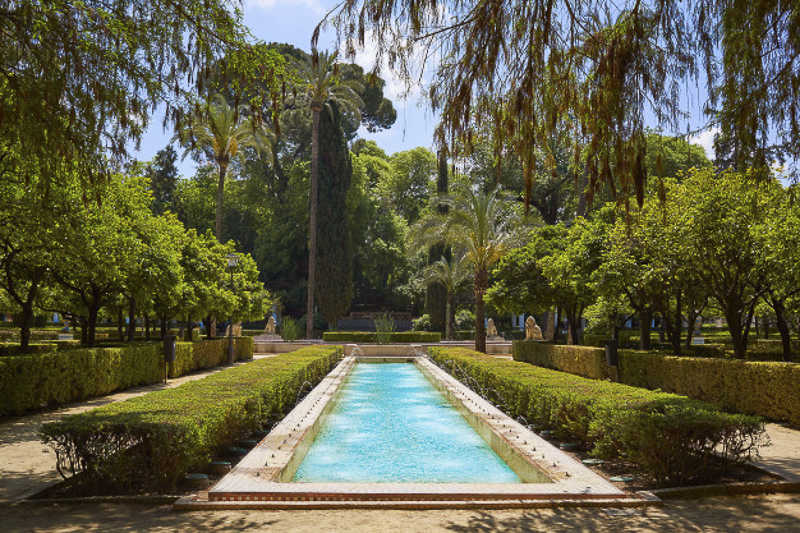
- Maria Luisa Park:
Opened in 1914, Maria Luisa Park was once part of the private gardens of the Palacio de San Telmo.
This expansive park, easily accessed from the city center, is perfect for families due to its natural beauty and space for children to explore.
Opening Hours:
Winter: 8:00 AM - 10:00 PM
Summer: Closes at midnight.
- Plaza de España:
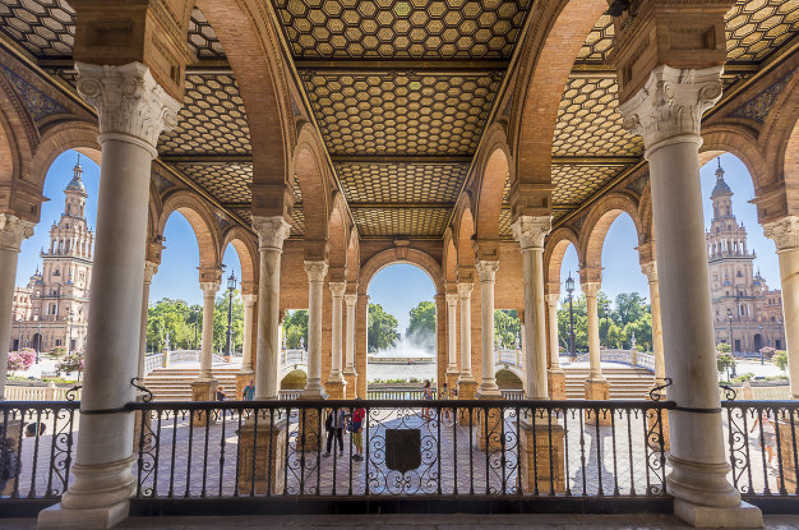
Plaza de España features a diameter of 170 meters and is flanked by two towers that rise 74 meters high, connected by semi-circular buildings.
The square boasts 46 benches representing each Spanish province, paying tribute to their significance in Spanish history. It’s undoubtedly one of the most photographed spots in Spain.
- San Telmo Palace:
Construction of San Telmo Palace began in 1962 on grounds that once housed the Inquisition.
This Baroque masterpiece features a rectangular layout with several interior courtyards and intricately designed towers at each corner, along with a beautiful chapel and gardens.
- Museum of Fine Arts:
The Museum of Fine Arts opened in 1841 and remains one of Spain’s most prominent art galleries.
Among its extensive collection are notable baroque works by Zurbarán, Murillo, and Valdés Leal, as well as 19th-century Andalusian paintings. Best of all, entrance is FREE for European citizens, though the museum is closed on Mondays.
With all this, you now know what to do in Seville in two days!