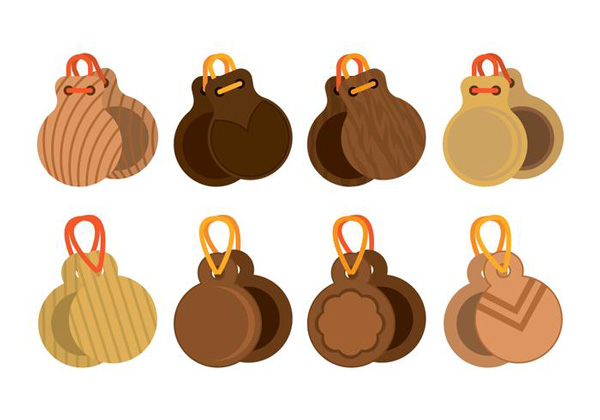
The castanets (“castañuelas” in Spanish) are musical instruments that have historically been associated with flamenco. They form part of the choreography and the aesthetics of the dancers in a choreographed theatrical performance. Along with the classical guitar, they give that special touch to traditional Spanish music.
Manufactured using hard wood, usually ebony, castanets are designed to endure the continuous strikes involved in flamenco activities. They are also reinforced with synthetic materials such as laminates for added durability.
But what exactly are the castanets or “castañuelas”? What is their origin? These and more questions will be answered in the following article. We’ll delve into an instrument that has evolved over time, becoming an essential accessory of Spanish folklore. If you are interested in buying castanets, follow us until the end.
What are castanets?
The castanets are special instruments, also known as Spanish castanets or flamenco castanets. They play a fundamental role in the rhythmic sounds of traditional Spanish dances. In fact, they are part of the country’s cultural heritage.
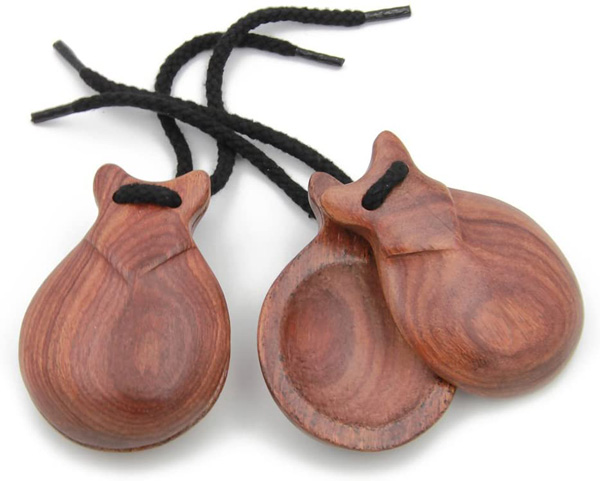
As mentioned, castanets are made from durable wood, providing a sound effect that harmonizes with the classical guitar. Some castanets have been modified with fabric and glass fiber for different sound effects.
These instruments have been part of Spain for centuries, and their history is more fascinating than it seems. Even today, they remain very popular and are integral to folk dance, especially in Seville. Flamenco, in particular, is rich with the sound of castanets.

What is the origin of the castanets?
The origin of castanets dates back more than 10,000 years, when civilizations began to build the first models that later became known as wooden castanets. These early versions were very different from today’s, featuring less coating and resistance, being more natural and less synthetic.
There is some confusion regarding the exact location of their creation. The most accurate version suggests that it was the Phoenicians who first developed castanets as musical instruments. This knowledge was then passed on to the Iberians, who initially referred to them as ‘crusmata’.
Over the years, the castanets traveled from Middle Eastern countries to Europe through trade relations and globalization. They found a welcoming home in Spain and Italy, where they were embraced for their musicality.
Eventually, castanets became an essential element of classical music, with their first official use recorded in Spain. Artists began to accompany other instruments in a captivating harmony. Today, they are a characteristic instrument of flamenco, used not just in Spanish culture but also in other parts of the world, including Argentina.
How to wear castanets?
Castanets have a shell-like shape. They are used as clappers that emit sound through the pressure of the hands, and they are connected to the fingers with a thin cord. This cord is tied to the thumbs, running through the fingers and hanging down to hold the castanets firmly in place during use.
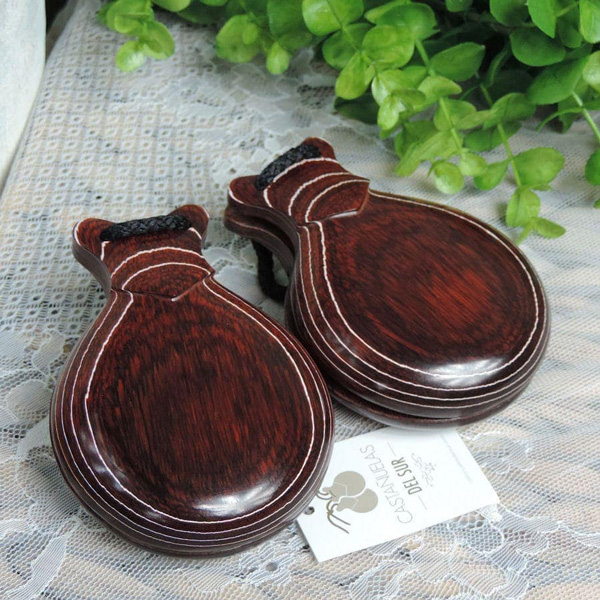
Users can manipulate the wooden shells to produce a variety of interesting sounds, depending on the music or choreography. The ‘click’ sounds often accompany dancers’ steps, creating a double sound effect that resonates on the ground or against walls.
Castanets and flamenco
Although we have emphasized throughout the article that no other object identifies castanets within the realm of flamenco, it is worth noting that they were not originally part of this traditional musical genre. Their incorporation into the music and dance has significantly transformed the genre in Seville.
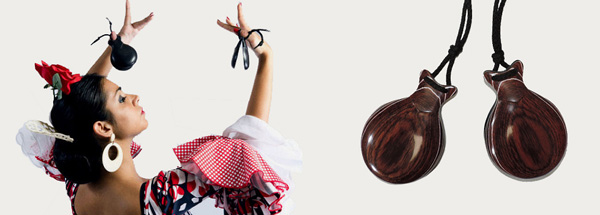
When a dancer uses castanets during a flamenco performance, they hold a shell of wood in each hand, playing them with their fingers. The speed of movement and the striking of the shells create rhythmic sounds oscillating between high and low tones.
The sharp sounds are known as ‘females’, creating a complex and strong rhythm, usually manipulated with the right hand. Conversely, the lower sounds, produced with the left hand, are referred to as ‘males’. This systematic structure is essential for dancers to master as they complete their steps.
What to keep in mind when shopping for castanets?
When purchasing castanets, consider a few key points. Here’s what you should keep in mind.
Size and comfort
Castanets come in a variety of sizes, adapting to the palm of different hands. It’s ideal to look for a model smaller than your palm, as they should be easy to handle and comfortable to use.
Safety Kit
When buying castanets, inquire if they come with protective bags or cases. These protect the instruments from accumulating heat and moisture.
Musical genre
Today, castanets are manufactured for various musical genres. If you’re planning to buy a pair, it is advisable to ask for models specifically designed for flamenco, classical music, and more.
Best castanets to buy
Below, we recommend the best castanets to buy.
Chestnuts DOBANI
These are two castanets made of ebony. They consist of one unit for the right hand and one for the left hand, both shaped like clams and connected with a thin cord to the thumbs. They emit a slightly stronger sound than traditional models and are recommended for expert dancers.
Castanets LP ASPIRE
These two accessories are ideal for flamenco and are designed for smaller hands. Made of hard wood resistant to impacts, they are lightweight, weighing only two ounces. Their dimensions are 1.2 x 8 x 5.5 inches.

Castanets Latin Percussion 432
This pair of castanets includes one for the right hand and one for the left. They are crafted to precise dimensions, ensuring authentic sound quality. Additionally, they are made from nylon, providing resistance to constant use.