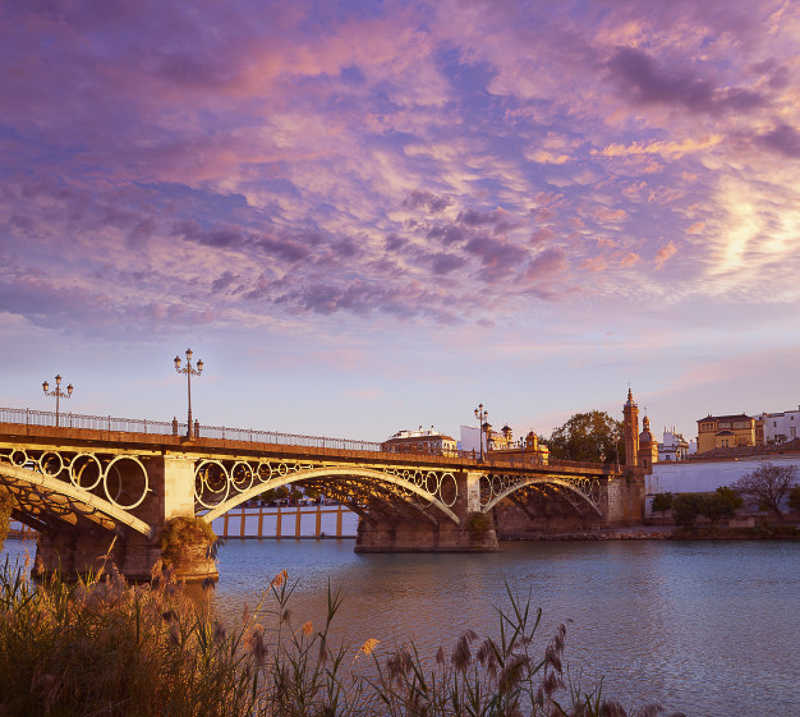
Autumn, after spring, is the best season to visit Seville, especially during the month of October. These days feature mild weather—sunny with some rain—which do not hinder exploring the old town, visiting monuments, and strolling the streets near the city center.
It’s an ideal time to explore the city by bike due to its extensive network of bike paths. You can navigate the river on typical sightseeing cruises or by boat-canoe, sailing the Guadalquivir to Sanlucar de Barrameda. Additionally, a carriage ride through Maria Luisa’s Park offers a chance to enjoy the park’s natural beauty.
Coinciding with the national holiday on October 12, Columbus Day, which celebrates the discovery of America, the streets come alive with vibrant atmospheres. The street markets remain open and brimming with activity. Los Gallegos celebrate la Romería Gallega in Alamillo Park during these festive days.
These holidays also feature cultural events such as premieres in cinemas and theaters, dance performances, classical music concerts at the Teatro de la Maestranza, modern musicals, and exhibitions at various venues, including the Fine Arts Museum. You can also catch numerous shows in theaters and auditoriums, as well as frequent sporting events.
Some Charming Proposals for the October Bridge Pillar in Seville:
The Tomb of Columbus
The tomb of Christopher Columbus is located on the right arm of the transept and is guarded by four kings in ornate gowns, carrying the coffin of this illustrious figure. These kings represent the four historical kingdoms of Spain: Castile, León, Aragon, and Navarra.
Spain is symbolized by the four harbingers, while America is represented by a base of Aztec style. Columbus has been interred here since 1899, after his remains were moved from Valladolid, Santo Domingo, and Havana. On the evening of October 12, an emotional ceremony takes place, with a wreath laid at the tomb by the mayor of Seville, making it a splendid time to immerse yourself in history at the cathedral, adorned in its finery. Additionally, a religious act, Te Deum, is celebrated in the chapel of the Virgen de la Antigua, the patron of the conquistadors.
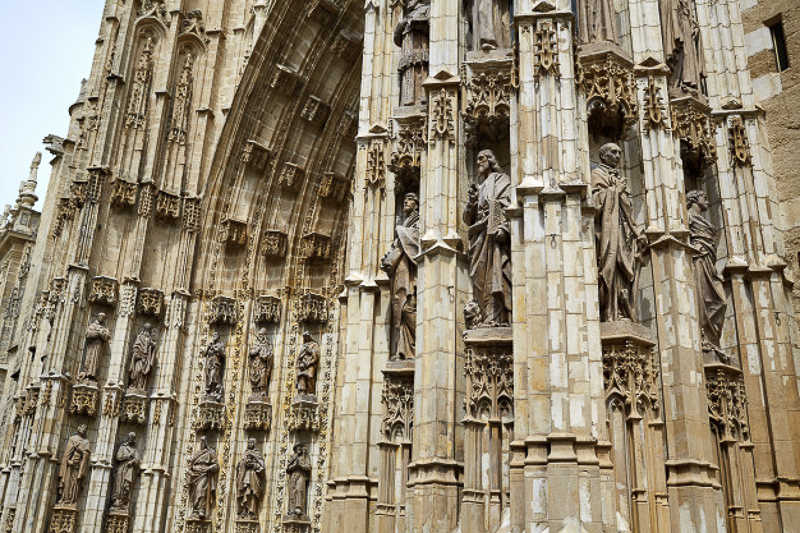
The Chapel of Our Lady of the Pillar
Our Lady of the Pillar was brought to Seville by Navarran soldiers participating in the reconquest of Seville by Fernando III of Castile in 1248, becoming the city’s protective patron. The chapel was constructed on the north wall of the cathedral, accessible through Giralda, featuring a seventeenth-century altarpiece. This altarpiece showcases the image of the Virgin dating back to the 1500s.
Path Columbus, Seville Elsewhere Colombinos
October is the best time to commemorate the discovery of America by visiting the places associated with Christopher Columbus. The Archivo de Indias is the most emblematic location, housing invaluable historical documents regarding the discovery of America, including some memorabilia of the admiral, such as his portrait.
The Alcázar, located nearby, welcomed Columbus upon his return from his second trip. It was in this building that the well-known Courtroom was established, dominated by a large painting of the Virgin of Mareantes or Navegantes, sheltering various characters involved in the discovery and conquest of the Americas, including Columbus, Amerigo Vespucci, and Juan de la Cosa.
The Colombina Library, situated next to the Cathedral, preserves all the bibliographic legacy of his son Hernando Colon, who is buried in the after-choir of the Cathedral.
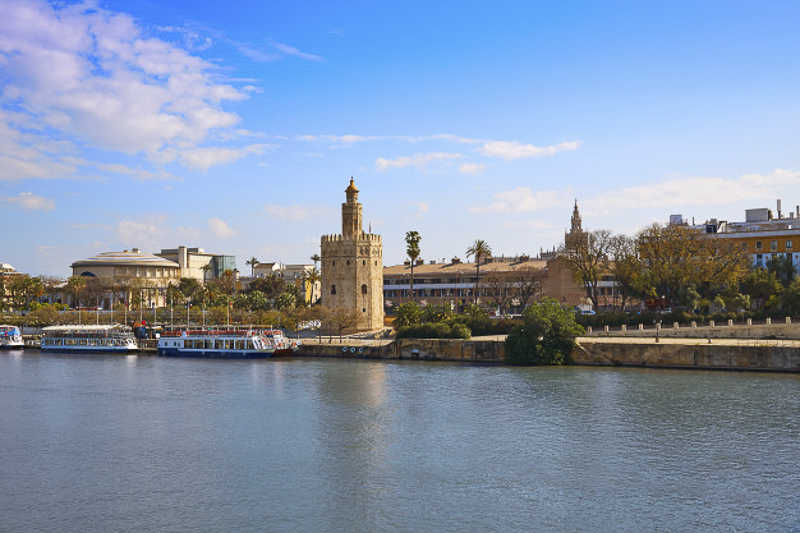
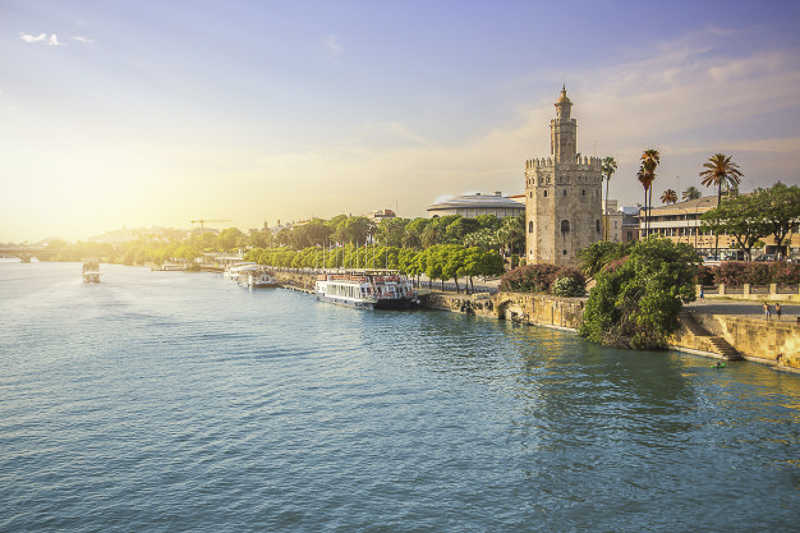
Naval Museum Torre del Oro
Here, you can find memorabilia of the discovery of America, including models of the three caravels and portraits of the Pinzon brothers, among other naval artifacts.
Monastery of Santa Maria de las Cuevas, at the Cartuja in Seville
Here, funereally linked to Columbus, his body was moved by the affection he had for this place. He rested there for 30 years. The monastery served as a retreat for the navigator, as it was where he prepared for his travels. The church of this monument, dating from the fifteenth century, showcases Gothic and Mudéjar architecture.
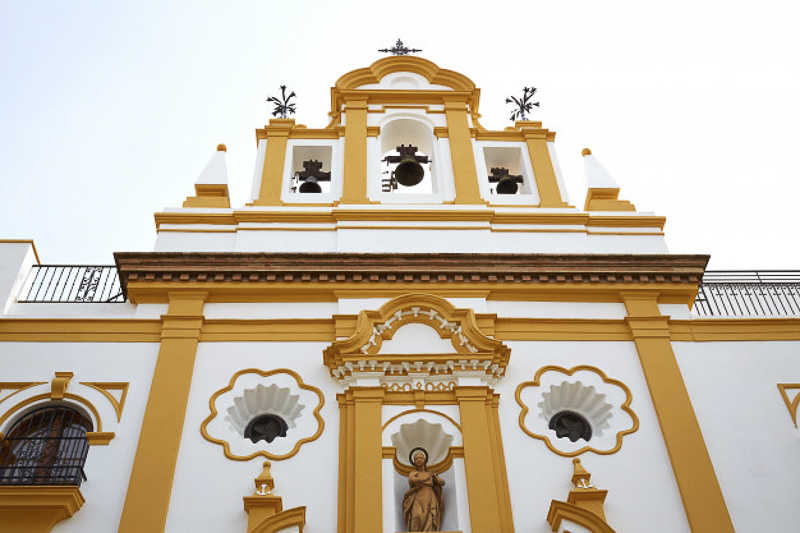
Visit the Chapel of Santa Ana
This chapel housed Columbus’s body, and it also features gardens bearing his name, where you can find his sculpture, donated by the wife of Carlos Pickman, the creator of faience and ceramics La Cartuja in Seville.
-
The Claustrillo
This site features the seated statues of Hernan Cortes’ wife, Juana de Zuñiga, and her daughter Catherine, buried in the Dominican convent of Madre de Dios, located on San José Street.
-
Navigation Pavilion, located next to the Cartuja, recreates the exit port to the Indies on the River Guadalquivir.
-
Monuments to Columbus and the discovery are found in the gardens of Murillo-Catalina Ribera. This large monument was created for the Latin American Exhibition of 1929 by sculptor Marchena Collaut Varela, featuring a lion and a caravel, with the admiral’s face appearing in a medallion at its base.
-
In the Plaza de España, we will see a medallion with the image of the conqueror alongside other figures from the discovery of America, such as the Finches brothers, marinheiros, and Franciscan Father Marchena, the admiral’s protector, who helped to contact the Kings of Spain.
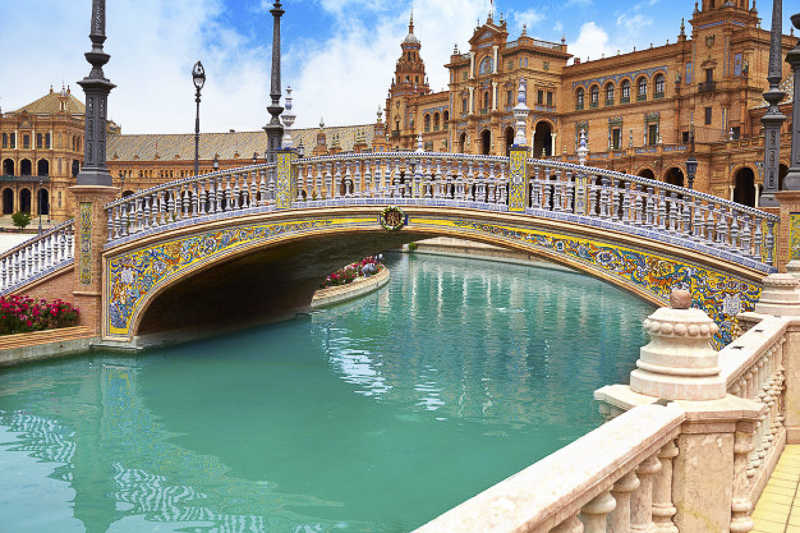
Complete with tiles representing the Canaries, depicting Columbus’s arrival at the islands, Salamanca, a briefing of Columbus, and Huelva represents the departure of the caravels from Palos and Barcelona, showcasing the reception after his first trip to America.
-
In the park of San Jeronimo, you can find the “Huevo de Colón,” the largest bronze sculpture in Seville, a gift from the City of Moscow to the city in 1995.
-
At the Museum of Fine Arts, you will find a bronze relief on the walls of the cloister depicting the Presentation of Christopher Columbus to the Catholic Monarchs in Barcelona, designed by Antonio Susillo.
-
Monuments to Rodrigo de Triana, the first sailor to sight the Indies, are located in Triana along with Columbus and other sailors.
This site is near the Bridge of the Christ of the Expiration, where his statue stands between Genoa and Pages streets of the Corro, a piece that originated from the 1929 Ibero-American Exposition.
Recall that one of the great discoverers of America, Hernán Cortez, spent his last years and died in the nearby town of Castilleja de la Cuesta. He resided in a palace built in the 16th century that has undergone many modifications. Initially, it belonged to the Dukes of Montpensier in the 19th century and later became the College of the Irish.
This building, located along the old road from Huelva, showcases neo-Moorish architecture that resembles a fortress with sturdy brick walls and battlements.
His wife and daughter are buried in the Convent of Mother of God of Mercy, located on Calle San José. Additionally, Francisco Pizarro has a statue in the city, originating from the Conquistadores fountain at the Ibero-American Exhibition held in 1929. This statue is located in the gardens of the largest school, Hernando Colón, near the Avenue Reina Mercedes, an area previously occupied by the fountain.
Processions on October 12 in Sevilla
The autumn days of the “Puente del Pilar” (October 12) feature many Marian images in grand processions through the streets. These are not only under the patronage of the Pilar but also include the Virgin of the Rosary, whose feast day falls around this time.
The streets resonate with the smell of incense and the sounds of music bands, quintessential to Sevilla. In downtown San Pedro, you can visit the Chapel of the Pilar Virgin, presided over by an image from the eighteenth century.
On the afternoon of October 12, an emotional procession occurs during the entrance into the temple. After her appearance in Zaragoza, this image would become the first Virgin in the Christian world and would be brought to the city as the patron of the first Christian community. Pope Pío would later endorse this devotion.
Devotion to the Virgin persisted through Visigoth and Arab times and was revitalized during the reconquest, establishing a hospital next to the Cathedral and the Chapel of San Pedro. A Brotherhood formed in the 13th century still makes processions through the neighborhood, parallel to the modern image from the parish of Our Lady of the Pillar of St. Paul.