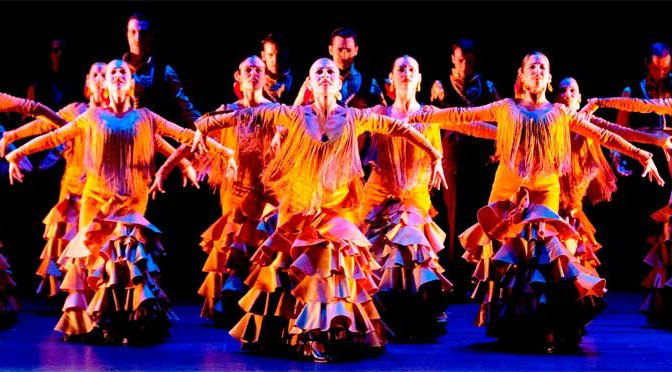
Being a cultural center, the typical dances of Andalusia are an intrinsic part of the heritage of the autonomous region of Spain. Dancing has always been more than a recreational activity; it is a tradition that unleashes the passion of social groups.
In Andalusia, this tradition thrives, as different localities celebrate various types of dances during local festivities. If you want to learn about the typical dances of Andalusia and what each one entails, you’re in the right place.
Below, we will explore a physical discipline that has captivated millions. Don’t miss it for anything in the world!
What is the typical dance of Andalusia?
The typical dance of Andalusia is the sevillanas, a dance style renowned in Seville and Huelva. It is characterized by rapid and slow movements, typically performed by four couples. The origins of the sevillanas date back to the Catholic Kings, who were influenced by flamenco in the EIGHTEENTH century.
The recognized movements of the sevillanas include paseíllos, past, confrontation, and coping. The dance types encompass corraleras, bowling alleys, and flamenco forms. The performance is executed in a time signature of 3/4, with the first beat being strong and the next two being lighter.
Dancers wear ruffled skirts and high heels, moving to the rhythm of guitar strings at any pitch related to Seville. This choreography is often performed during the evening of ‘Our Lady of Victory.’
Typical dances of Andalusia
The Robao
The Robao is a type of fandango dance, performed in a harmonic descending sequence, which is quite complicated to learn. During the choreography, both male and female dancers weave intricate foot patterns created by artists from Granada.
Flamenco
Flamenco is one of the quintessential dances of Andalusia that has inspired many other styles in the region. In both Seville and Huelva, flamenco has a significant cultural influence, with some of the best flamenco taverns found throughout Spain.
This dance genre is quite old, particularly in European contexts, and became the traditional dance by the EIGHTEENTH century. It combines singing and tap techniques, which are utilized by flamenco guitarists while dancers execute the genre’s characteristic movements.
Fandango
Fandango, which originated in the Balearic Islands, has gained great acceptance in Andalusia, evolving into a dance discipline inherent to the region. It is performed in couples to a ternary time signature, accompanied by castanets that punctuate the rhythm of the sing Spanish known as Jota.
Verdiales
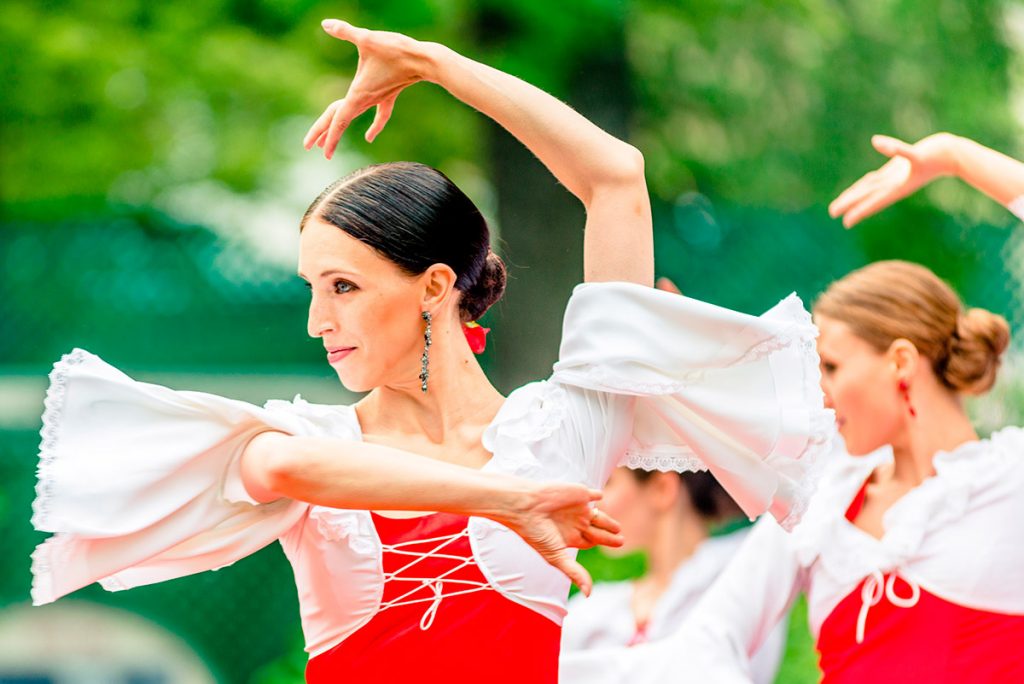
More than just a dance, Verdiales is an artistic expression of peasant culture with Andalusian roots, widely embraced by the population during fairs in various provinces and cities in Spain.
An offshoot of the fandango, it is accompanied by orchestras and various musical instruments, including cymbals, wooden guitars, and tambourines. The performance features an amazing scenery and typical choreography from the province of Malaga.