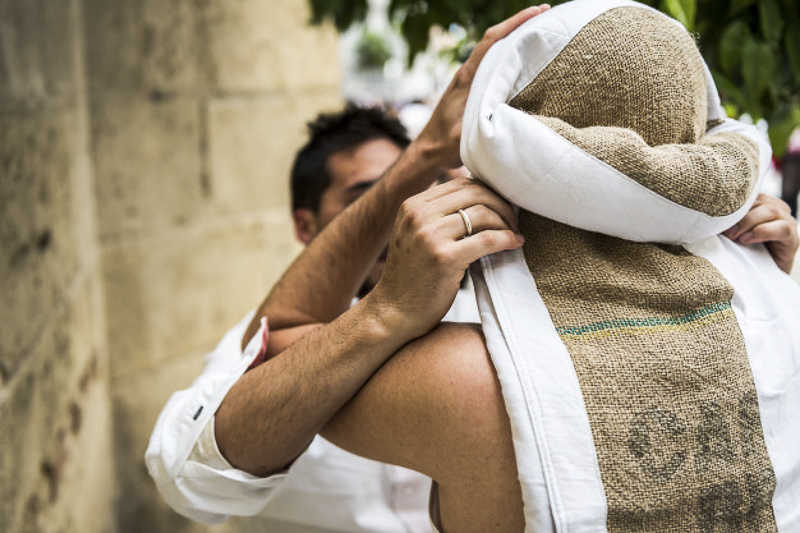
In this section, we offer a small guide intended for tourists who want to experience the enormous religious and cultural show that is Holy Week in Seville.
At first glance, this grand Sevillian festival can be intimidating. The whole city spills into the streets, and tourists fill the hotels, creating a ‘bulla’ or crowd that occupies every corner, making it difficult to approach the processions.
Like everything else, information is power. This section discusses some tips and tricks for enjoying Holy Week in Seville with a bit more comfort. This guide is designed for the brotherhoods of Seville, focusing on the most accessible locations with shorter waiting times, all within the historic center of the city.
It’s important to not only see all the brotherhoods but to enjoy more of them. We recommend itineraries that allow for walking, while avoiding crowds and long waits.
General Advice to Enjoy the Holy Week in Seville
-
Easter processions in Seville are organized by brotherhoods, each with its own schedule and specific itinerary; no two have the same route. The procession consists of Nazarenes (penitents, guild members) and one, two, or three “steps,” which are the religious images carried on beautifully decorated structures by a group of people called costaleros.
-
Some brotherhoods undertake long journeys with thousands of Nazarenes, while others remain within the historic district with more modest numbers. There are also more popular processions with a relaxed atmosphere, and some that are serious and silent, drawing the attention of visitors. Generally, the darker the robe of the Nazarenes, the more serious the brotherhood. Nonetheless, respect for religious rituals and symbols is a norm throughout the week.
-
The processions usually take place in the afternoon and evening, peaking between 7 PM and 1 or 2 AM. The “madrugá” (early morning) procession, however, begins around 1 AM and ends around noon the following day.
-
The value of a brotherhood is measured by its tradition, the quality and age of its images, the ability of the costaleros, and the coordination with a good band. A true fan will seek special moments and the most picturesque corners.
-
For untrained visitors, we recommend experiencing the festivities from a more peaceful distance. Avoid crowded areas and enjoy the processions on wider avenues. We have compiled a list of streets and recommended schedules for easy access to the processions (see below for each day). If you seek a deeper immersion, consider going with a local or seeking advice.
-
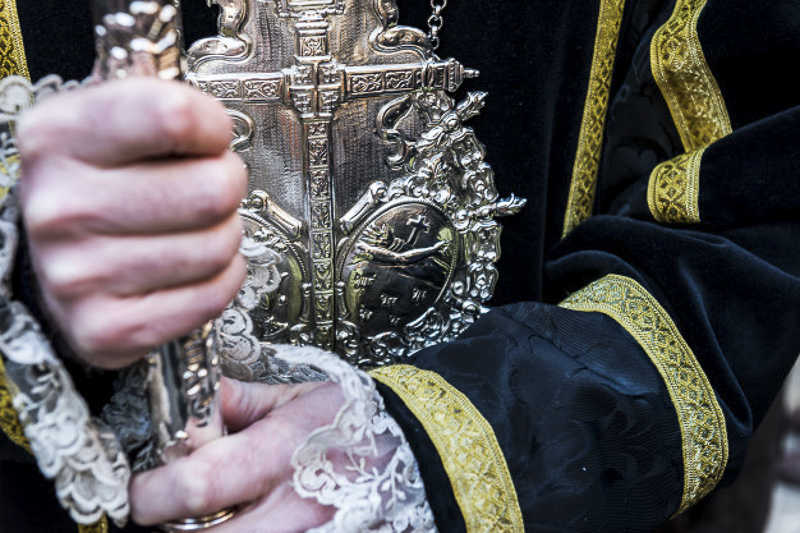
It’s important to respect the atmosphere of the procession. Some moments are marked by absolute silence, during which we encourage turning off mobile devices and controlling children as much as possible. If you have questions, approach the “chapel,” recognized by their formal attire (usually dark jacket and tie), who bears a symbol of their brotherhood. These chapels are enthusiastic fans of Easter and are typically friendly to visitors, happy to share their knowledge and advice about the most important festival in their city, provided it’s an appropriate time that does not disturb the solemnity of the brotherhood.
-
For visitors with children, we recommend looking for less formal processions, which often feature many Nazarenes and take place in the evening. Children can be positioned in the front row to collect sweets or “estampitas” from the Nazarenes, making it an entertaining experience.
-
Holy Week brings a huge influx of visitors to Seville. If you wish to visit one of the great monuments, it’s essential to book a tour or tickets in advance to skip queues. Be mindful of the processions; access to certain monuments, such as the Cathedral, Giralda, and the Alcázar may be restricted. It’s wise to call and inquire before visiting.
How to Move Between Processions
-
As a general rule, if you want to see a brotherhood in a narrow street, get there before the Nazarenes start passing, avoiding settling at intersections.
-
If the brotherhood is already on the street, we recommend following the last step, usually the Virgin, and entering the street behind it to position yourself as closely as possible.
-
The charm of brotherhoods is not merely in watching them go by; enjoy the experience by following them for 200 or 300 meters, listening to the marches and savoring the rhythmic movements. The most exciting moments typically occur when steps and music bands coordinate.
-
To cross the official race (Cathedral Square, the Duke), several marked routes are available:
- Calle Sierpes to Cerrajería street and Sagasta-Plaza de El Salvador,
- Plaza de San Francisco towards Plaza Nueva or Plaza de El Salvador,
- Constitution Avenue, Hernando Colón street,
- Calle García Vinuesa (Arenal) direction Cathedral.
-
You can cross in front of the procession if the crowd isn’t too thick; just ask politely.
To move to or from the Cathedral to the Bell area (Plaza del Duke), typically requires a detour. Recommended routes are to the north via Don Remondo, Corral del Rey, Plaza de San Isidoro, Plaza Cristo de Burgos, Encarnación, Plaza de San Andrés, Amor de Dios, Trajano to the Plaza de Duke. To the south, follow Mateos Gago, Alcazaba, Plaza de Triunfo, Av. Constitución, Calle Santander, Paseo Colón, Reyes Católicos, and Marqués de Paradas.
Viewing Processions Inside the Cathedral
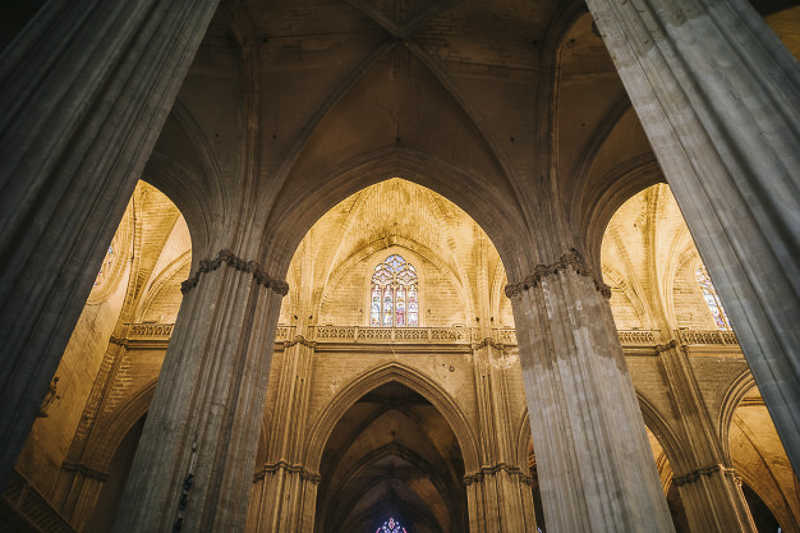
You can view the brotherhoods inside the Cathedral, but entry is on a limited schedule. Once inside, if you exit, you cannot re-enter. Along the procession route, no bands or music accompany the brotherhoods.
To view the brotherhoods in the streets, we recommend the following times:
-
Evenings from 4 PM to 8 PM – ideal for a younger audience, especially if you’re with children, as you can see the brotherhoods in daylight.
-
Nights from 8 PM to midnight – the most public time when the official race is paraded; ideal if you rent a chair.
-
Madrugadas from midnight – this time sees less public interest, as the processions are collected from their neighborhoods, where they often sing quietly.