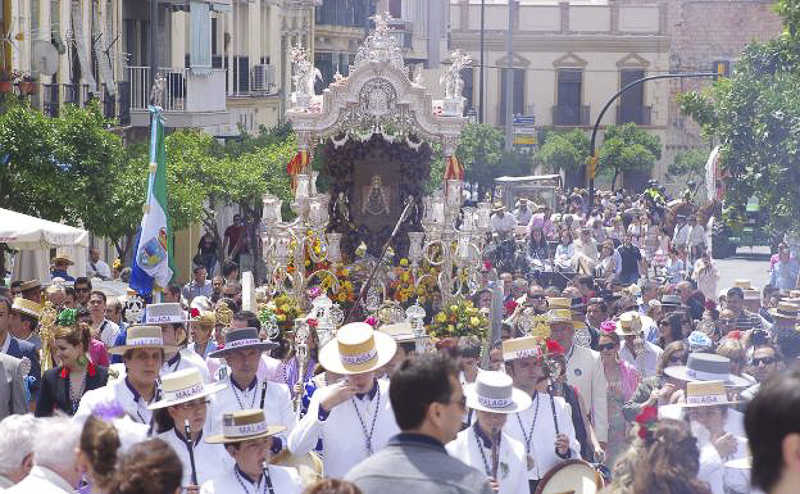
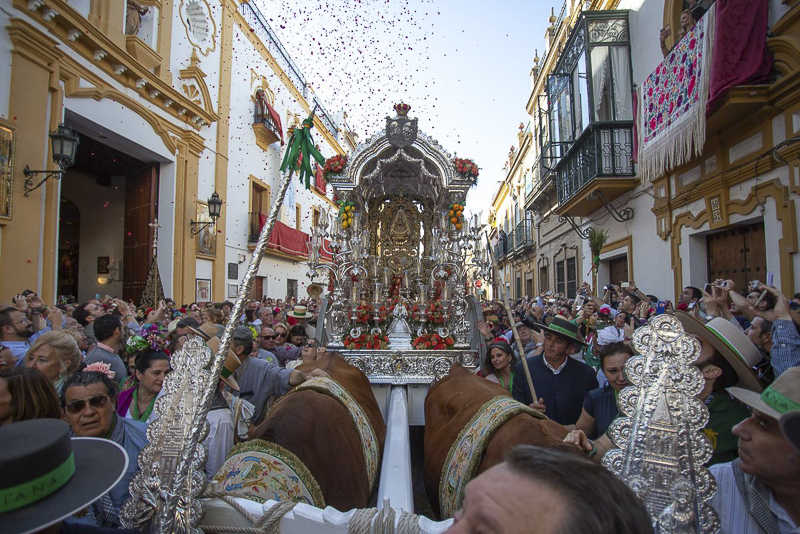
Devotion to the Virgin of El Rocio in Sevilla Brotherhoods of the Dew Sevillanas make the pilgrimage to the village, with its “simpecado” behaved in a luxurious and decorated wagon pulled by oxen, accompanied by the pilgrims walking alongside.
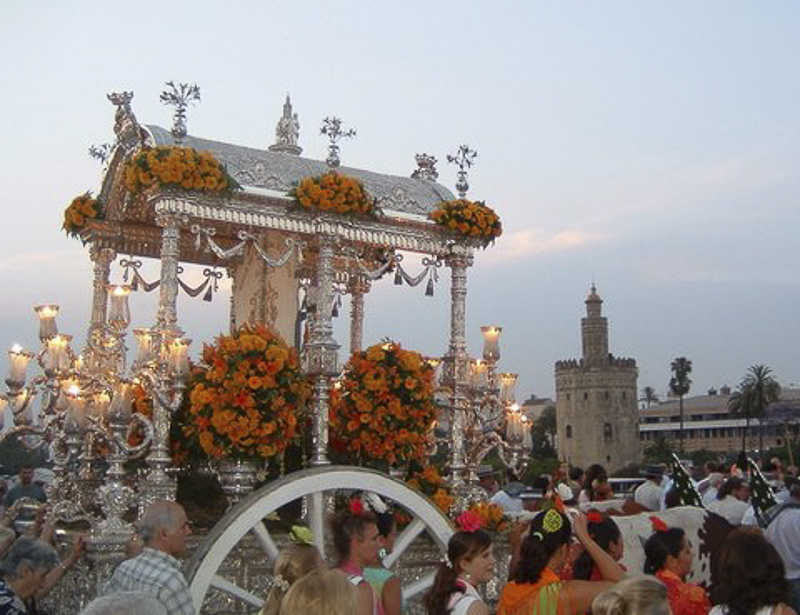
Usually, they leave their temples in the morning from Tuesday to Thursday before the feast in the village, accompanied by a large audience. During the procession through the different streets of the city, we can hear rockets and rocieros sones.
The return and collection is usually done later on Wednesday or Thursday at the festival, typically in a calm and peaceful atmosphere. They follow the same path that they took on their exit, entering the city in the afternoon, between 5 and 8, and are collected in their temples at midnight.
The most traditional Sevillian brotherhoods are:
Brotherhood of Rocío de Triana
La Hermandad de Triana comes from the chapel of the street or l Evangelista parish of San Jacinto and has great drawing power.
Through the main streets of the neighborhood—Pagés El Corro, San Jacinto, and Castile—they travel to the Basilica of sponsorship, where the dismissal is made.
It is also quite significant to run in the nearby town of Castilleja de la Cuesta, where the rociero feel is strongly identified with this Brotherhood.
Continuing along the path of Triana to Villamanrique and the Dew, which runs parallel to the road Bollullos to Aznalcázar. After passing the Burning River, they access Villamanrique to follow the Royal streak to reach the village of El Rocío in Huelva.
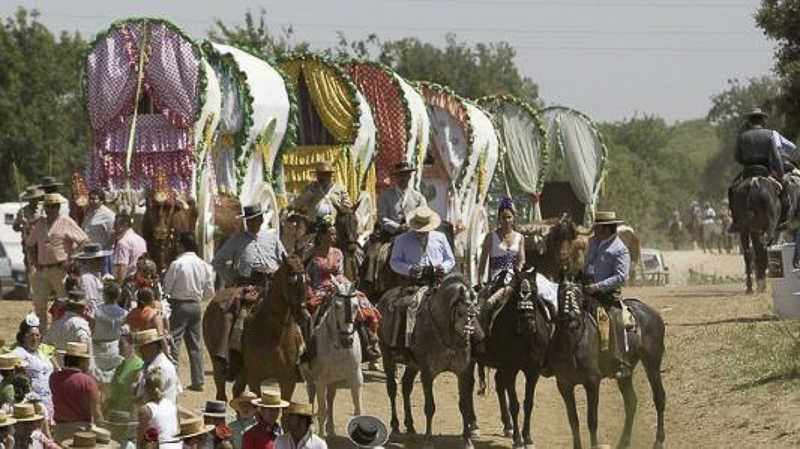
On the return, they go behind the brotherhood of the Macarena, passing through Chapina, Castilla, San Jacinto, and Pagés of the Corro Evangelista, where its chapel is located.
The Brotherhood of Seville
This brotherhood leaves from the parish of El Salvador and runs through the center of the city, past the Cathedral, heading down the avenue of Argentina, towards San Juan de Aznalfarache, where it is received with festivity.
It continues on Mairena de Aljarafe and Almensilla, leaving roads to go to the hermitage of Cuatrovitas in Bollullos de la Mitación. Then, it passes Ford Burns, Guadalimar.
From there, it follows the way of Hinojos, stopping at the Finca el Caoso, reaching the bridge Ajolí, and finally the village of El Rocio.
On the return, it passes through Bormujos, Tomares, San Juan de Aznalfarache, entering Sevilla along the avenues of Blas Infante and Argentina, finally reaching the city center.
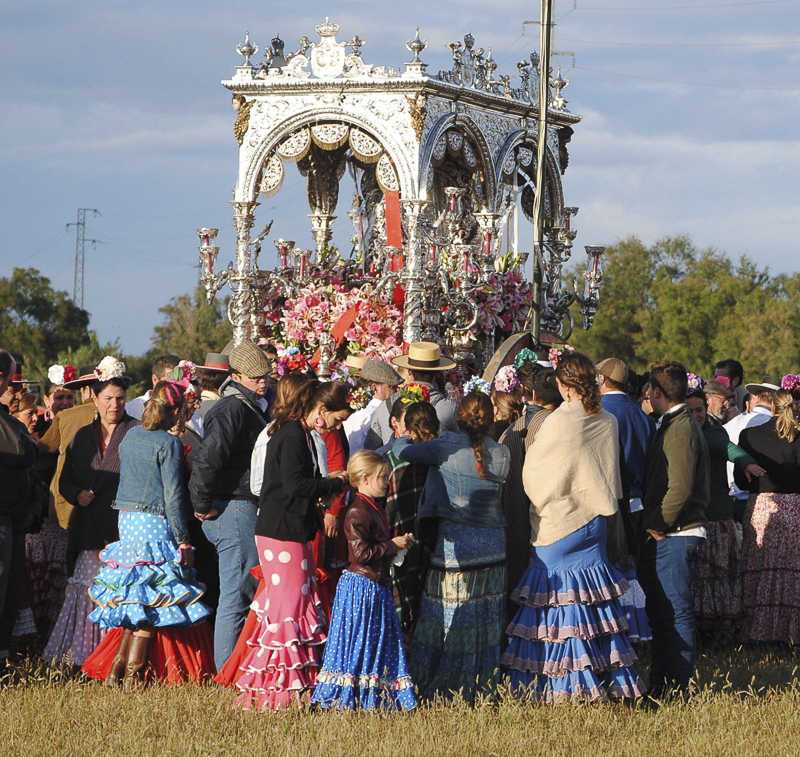
Brotherhood of the Dew of the Hill
The Eagle Brotherhood of the Hill of the Eagle sets out a day earlier, from the parish of Sorrows in its neighborhood.
It passes through Parque Maria Luisa, exits Eritaña, crosses the Delicias Golf Fair bridge, and crosses the Guadalquivir River via the iron bridge of San Juan de Aznalfarache.
From there, it goes by Mairena de Alcor along the road to Villamanrique de Triana, then takes the road of Villamanrique, following the Royal Raya to the village.
On the return, it goes along Avenida Juan Pablo II, crossing the bridge of Delicias, arriving at Plazas America and Spain, Ramon y Cajal, and its neighborhood.
Military Brotherhood of Rocio
The Military Brotherhood comes on the same day as the previous one from the parish of Our Lady of Loreto, in the neighborhood of Tablada. It tours the neighborhood before heading towards San Juan de Aznalfarache, following the path of the Brotherhood of the Hill of the Eagle.
Sevilla Hermandad Rociera South
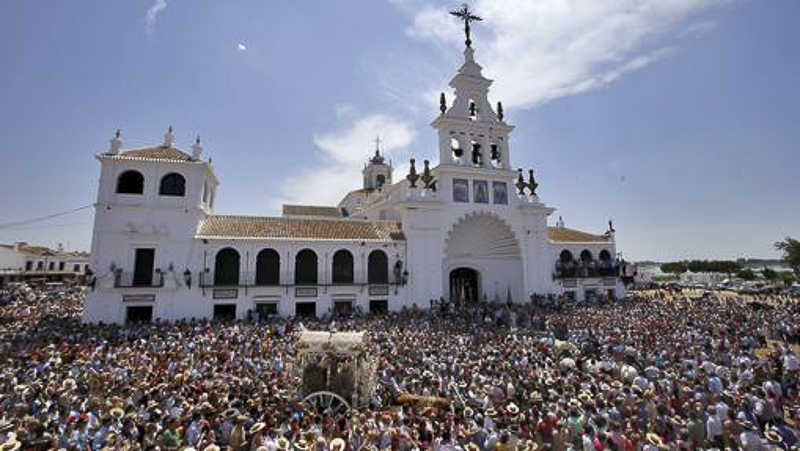
The Brotherhood of Seville South leaves from the parish of San Juan de Avila, in the popular district of the Polygon South. It passes through Parque de Maria Luisa, la Palmera, Av. De la Raza, Puente de las Delicias, Av. Juan Paul II, Golf, and farewell Fair city towards San Juan de Aznalfarache, Mairena, and the Triana-Villamanrique road.
From this location, it takes the Royal Raya, reaching the village. On the return, it comes via Juan Pablo II Avenue, towards the bridge of Remedios, Maria Luisa Park, El Porvenir, Shooting Line, and its neighborhood.
Brotherhood of Rocio de la Macarena
La Hermandad de la Macarena departs before the twinned de Triana parish of San Gil. It walks through the neighborhood to Alameda, San Lorenzo, where it visits the Basilica of the Great Power.
The route continues down the street Torneo and Isla de la Cartuja, heading towards Beds, Castilleja road to Villamanrique, and then follows the Raya Real to the Dew.
Upon returning, it enters the Patronage, crossing the bridge of the Cub, Calle Marques de Paradas, Bell, St. Angela de la Cruz, Macarena, and Feria street.
Visit to the village of El Rocío (Huelva)
From Seville, the village of El Rocío is 85 km by road (approximately one hour). There is easy parking available for vehicles.
Therefore, it is perfectly feasible to spend a magnificent rociera day with overnight accommodations in the capital. If we leave on Sunday evening, we can witness the main events of the pilgrimage and the exit of the Virgin in the early hours of Whit Monday.
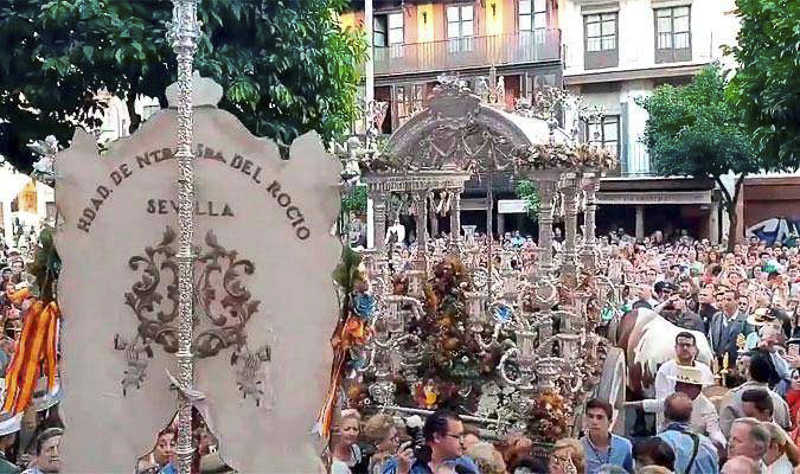
El Rocio in Sevilla
These are popular points of rocieras brotherhoods in the province of Sevilla:
- Crossing Villamanrique. More than seventy Brotherhoods and Associations Rocieras visit this Sevillian town, the door and Antesala Doñana El Rocío, celebrating Pass Brotherhoods.
It is an event rich in tourist tradition, history, and devotion. From Tuesday through Friday, during the round trip, moments of emotional intensity multiply.
Brotherhoods are received by thousands of attendees, offering a unique experience, especially by the old simpecado of the first and oldest Brotherhood of Rocio, Villamanrique de la Condesa, present under the lintel of the Church of Santa Maria Magdalena, located in the Plaza of Spain.
Then, the brotherhoods rest in the Dehesa Boyal, at the exit of the village, where we see a large mural of the Virgin of El Rocio. The return of the brotherhoods features the remarkable entrance of the Brotherhoods of Villamanrique and Triana.
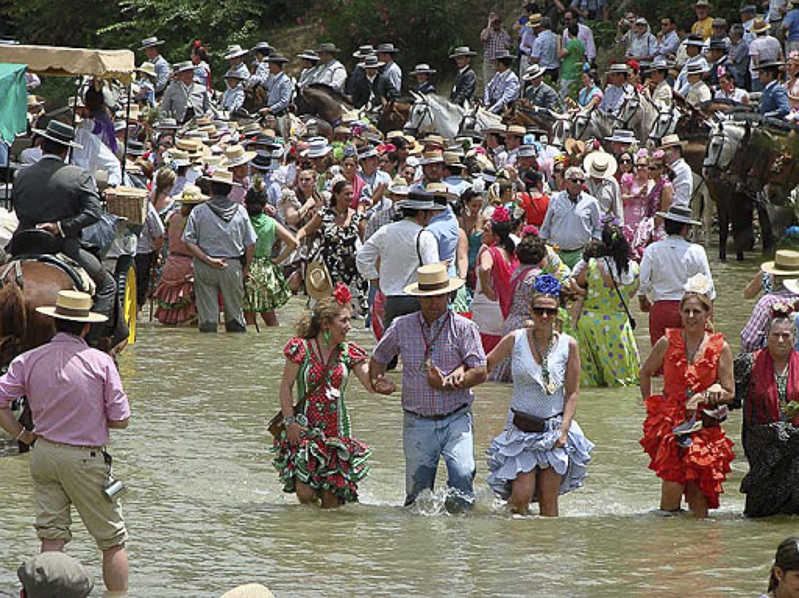
- Vado del Quema. The crossing by the ford of the Guadiamar River, 3.5 km from Villamanrique, serves as a shrine to the Virgin of El Rocio.
It is one of the most important events as it is a mandatory passage for most brotherhoods, celebrated in a fervent rociero environment, offering some of the most beautiful sights of this popular festival.
The event, declared a Festival of Tourist Interest in Andalusia, is the crossing of the river via a ford located in Finca de Quema, near Aznalcázar.
The passage of the cart of the Simpecado and the baptism of pilgrims making the road for the first time is celebrated here. Vehicle access is restricted; in order to get there, you can take the SE-667 road deviation to the green corridor of the Guadiamar from Aznalcázar, or visit Villamanrique starting from the ring village road Big Island.
In this ford, brotherhoods from the road Triana Villamanrique access, while brotherhoods coming from the south—Isla Mayor—can use the route from El Cruce, located 11 km away, passing through Monte Hill. Those coming from the north of the Alcor reach it via the green Laruta of the Guadiamar.
Before the ford is the resting place of the Guadiamar, where many brotherhoods spend the night.
- Crossing the Guadalquivir River, Coria. Passing through the Guadalquivir via the coriana barge is one of the most important yet lesser-known actions of the Romero Plan.
Brotherhoods participating include those from the Hill of the Eagle, Utrera, Morón, along with others from Malaga, Cordoba, and Granada. More than twenty brotherhoods participate, the first being the brotherhood of Malaga Caleta, followed by Fuengirola, Ronda, Granada, Santa Fe, and more.
From here, they follow the path towards Almensilla.
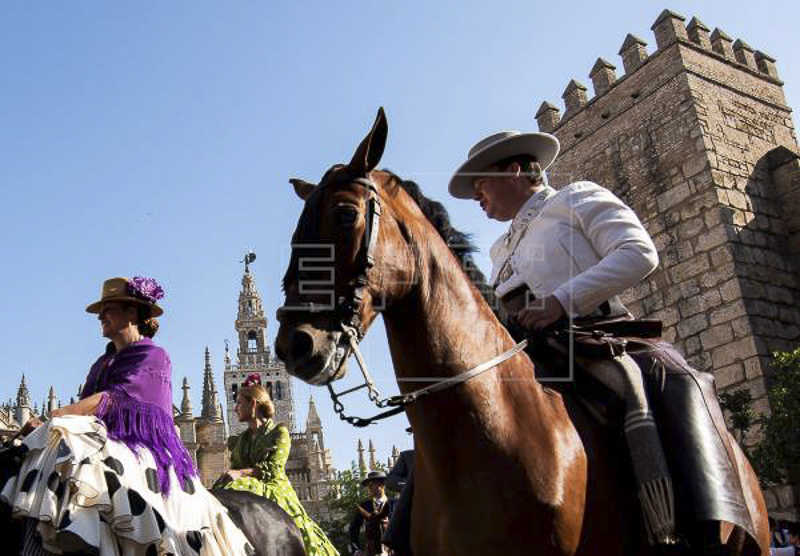
- Step through the towns of the Aljarafe. Castilleja de la Cuesta is filled with oxcarts, horsemen, and women in faralaes, singing and clapping, filling the town with joy and color.
Three brotherhoods of the Dew pass through the village: Camas, Triana, and Macarena. In San Juan de Aznalfarache, the brotherhoods of Seville El Salvador, Military, Cerro Sur, and Seville pause next to the church of San Juan Bautista.
Mairena de Aljarafe and Bormujos celebrate the passing of the Brotherhood of Seville, while in the fair grounds of Mairena, several brotherhoods take a break.
- Rocieros places on the road from Seville to Villamanrique. This area is called Cordel de Triana, where the fraternities rest during their “siesta” or spend the night.
This road runs parallel to the Bormujos – Aznalcazar road.
- Bollullos of Mitación. Hacienda de Torrequemada, located 7 km to the southwest, serves as a stopping point.
- Aznalcázar road. Instead of passing through Mairena, Triana stops here.
- Hacienda de Monasterejo. This diversion from Aznalcázar road, located 9.5 km away.
- Hacienda La Juliana. Near the Ermita de Cuatrovitas, accessed by a 14 km diversion along Aznalcázar road, serves as a stopping point for several brotherhoods, including Seville.
- Hacienda Lacruz. Located at the Ponce de Triana crossroads along the path of Puebla, it provides overnight accommodations for the Brotherhood of the Hill.
- Well of Adders. An overnight area for brotherhoods such as Macarena.
- Hacienda Lopaz. A typical stopping place for sevillanas brotherhoods, also serves as a route for brotherhoods from the Southern Alcor.
The Triana – Villamanrique path deviates south-west, becoming the so-called Cordel of the Shirelles, traversing through Colmenar, where the Triana stage curves, leading through the pine forests of Aznalcázar, until reaching the descansadero of the Guadiamar river stage Triana, and then advancing to the ford of burns.
- Road Benacazón. For brotherhoods coming from the Alcor center.
- Ermita Gelo. Located on the road to Aznalcázar Bollullos, continues to Pinar Marlo, connecting with Triana’s line before arriving at the Ford of burns.
- In Almensilla. The chapel and farm San Diego, located in a local access route to Puebla, are points for brotherhoods traveling from Puebla or Almensilla to Coria.
From here, they connect with the Triana line, in the descansadero de la Cruz Ponce or Juliana hacienda.
-
Aznalcazar. Roads passing through the pine forests to the south of town, where many brotherhoods spend the night, including the meadows and the pond Tornero, which is 2 km away.
-
Guadalimar river. The passage is made via the Ford of burns.
-
Villamanrique. After the ford burns, brotherhoods reach this population through Cañada via the Fresnos, arriving at the parish church.
In the meadows of Boyal and nearby Chaparral, many brotherhoods can be found.
- Rocieros places Villamanrique Road. Following from Villamanrique to El Rocio, there are several paths; some brotherhoods take the route to the west—along the road to Hinojos—stopping at the Brotherhood of Seville, La Calera, Head Rasa, and the Moralejo, to finally reach the bridge of the Ajolí, arriving at the village of El Rocio.
Others will take one of two parallel paths, south of the village towards the Real Raya, from Porla Sale Cat, Three Pinares de Pajares, stages of the Cerro, Sale Mauro, and ELPOZO Machine, which is a stage for brotherhoods of Villamanrique, Triana, Cerro, Sevilla Sur, and Macarena.
The alternative route further south takes the path of the Bujeo for estates Hato Blanco and Hato Raton, within the Doñana park.
These two routes reach alPalacio Rey, located 13 km from the town and the same distance from the dew. They serve as an overnight stopping place for several brotherhoods.
Past the Palace of the King, to the Dew, the locations include Cañada Mayor, El Vicioso, El Pinto, Matasgordas, El Ajolí, and Cano Marín, among others.
El Rocío Chico serves as a good opportunity to know the Sanctuary of the Virgin, an eminently religious festival featuring Triduum and Holy Rosary. On the morning of the nineteenth day, a solemn Votive function, renewed in August in the village of El Rocio, takes place in gratitude for the Virgin’s mediation during the War of Independence, culminating with an Eucharistic Procession featuring the Blessed Sacrament under a canopy around the shrine.