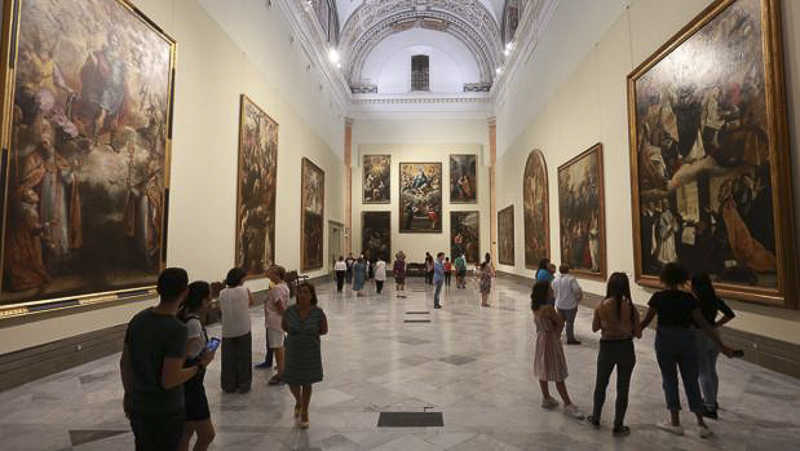
The Museum of Fine Arts of Seville is one of the most important art galleries in Sevilla, inaugurated in 1841. It is renowned for its collection of Sevillian and Andalusian Baroque painting from the nineteenth century. This signature artwork gives great importance to the Museum of Seville, making it one of the must-see attractions in the Andalusian capital.
History of the Museum of Fine Arts of Seville
The Museum of Fine Arts of Seville opened in the nineteenth century in a former convent. It is a significant place, housing works by renowned artists, including Zurbarán, Murillo, and Valdes Leal. These masterpieces showcase the Baroque art that has earned the museum its status as the second most important gallery in Spain.
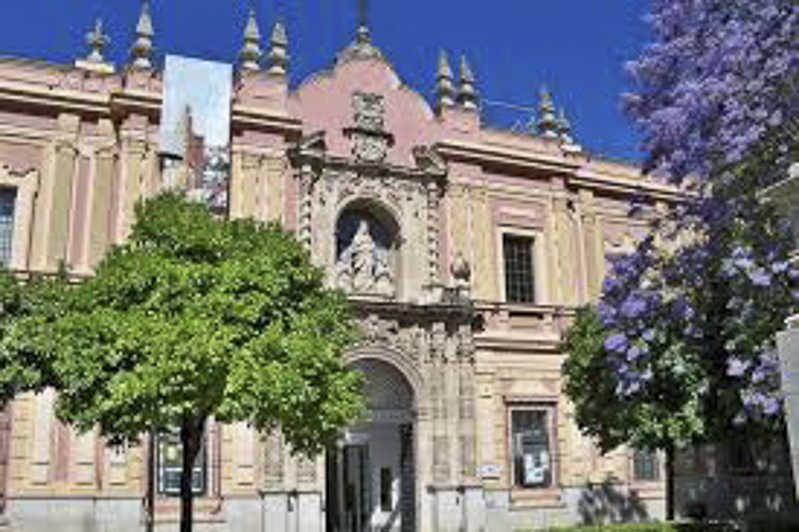
Originally built as a convent for the Order of Mercy, founded in 1218 by Pedro Nolasco after the reconquest of Seville from the Muslims, the museum’s historic architecture enriches its collection.
King Fernando III granted the land near the Guadalquivir River, where the convent was constructed. In 1602, it underwent renovations led by Fray Alonso de Monroy and architect Juan de Oviedo. The current façade, designed by craftsman Miguel de Quintana and Fray Bartolome de Roxas Francisco, dates back to 1729.
In 1625, the dramatist Tirso de Molina, a member of the Order of Mercy, was exiled from Madrid to this convent by the board of Reformation. In 1835, the order occupying the building was disbanded. These historical events are crucial as they relate closely to the museum’s establishment.
On September 16, 1835, a Royal Decree created the “Museum of Paintings”, leading to the expropriation of artworks from the church due to confiscation.
Since 1949, the “Academy of Fine Arts” has managed the museum’s inventory, which comprises 2,050 pieces. Sadly, only 300 of these have been preserved, primarily due to theft and mismanagement. Had these losses not occurred, the museum today could be one of the largest in the world.
The museum has undergone several renovations; notable ones include restorations between 1868 and 1898, which addressed the first floor’s arches and walls.
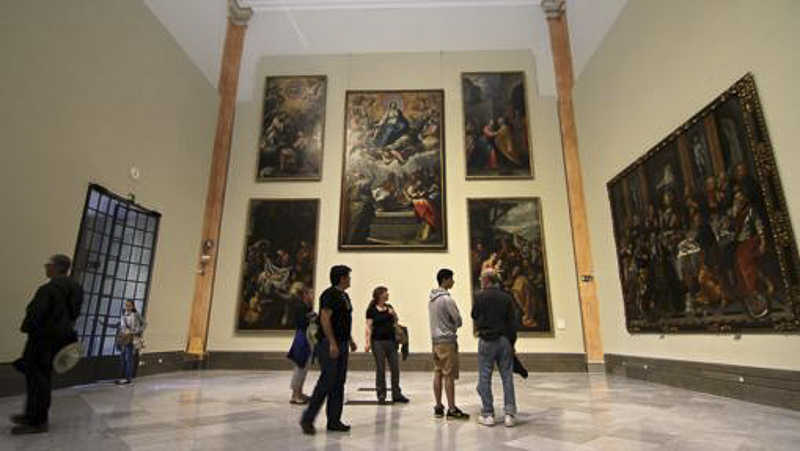
Between 1942 and 1945, the old sacristy was updated to include a new space. The third significant modification occurred between 1985 and 1993 to accommodate the growing demands on the museum.
Facing the museum square, the façade features the original convent structure designed in 1729 by Miguel de Quintana. Inside, visitors can appreciate a notable tile work by Hernando de Valladares, depicting “Santa Justa and Santa Rufina”, dated from 1600. This artwork previously belonged to the convent of the Assumption.
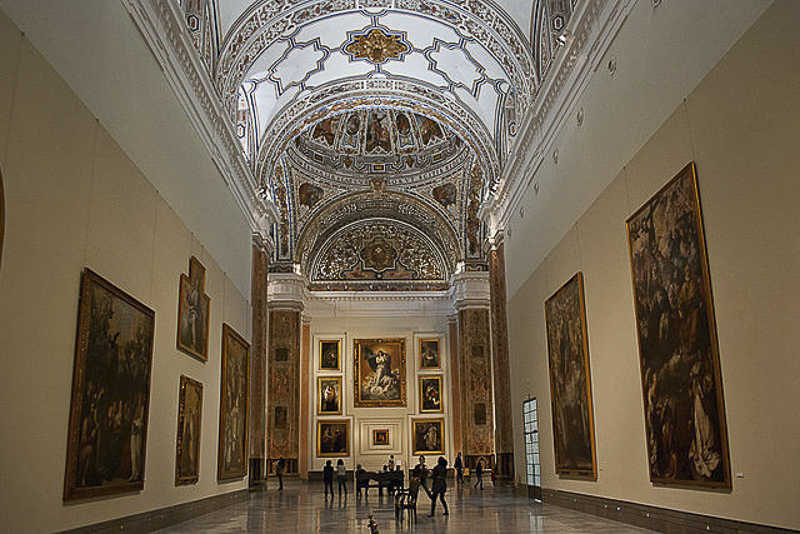
The building has three courtyards that connect via a grand staircase, with the church located at one end. A lobby showcases a tile design sourced from various monasteries in Seville.
Most Important Works in the Museum
Among the most emblematic pieces at the Museum of Fine Arts in Seville is the “Virgen de las Cuevas” by Francisco de Zurbarán. Other noteworthy works include “The Refectory of the Carthusians” by San Hugo and “Apotheosis” of St. Thomas Aquinas.
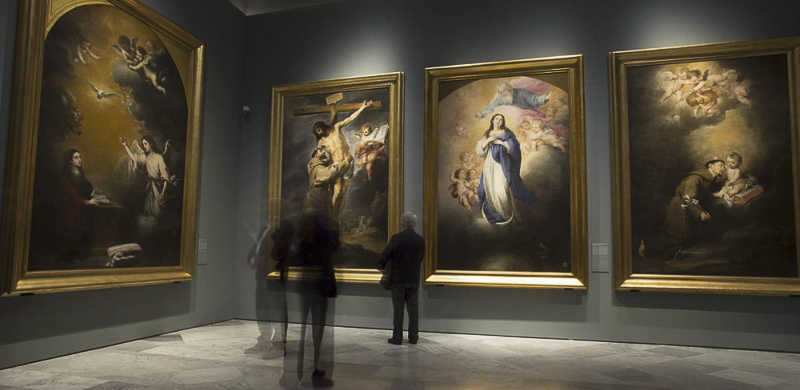
Significantly, without the numerous losses from theft or underpricing, this Museum could have become one of the world’s greatest art institutions. Visitors can also see works by Bartolomé Esteban Murillo, including “Santas Justa y Rufina”, “Immaculate Conception Great”, and “The Virgin of the Napkin”. Other notable works include “The Martyrdom of St. Andrew” by Juan de Roelas and “Cigar” by Gonzalo Bilbao.
If you love masterpieces and the earliest expressions of art, you cannot miss the Museum of Fine Arts in Seville. Its impressive architecture speaks for itself, and simply standing before the museum allows you to appreciate the rich history of Seville. Each step you take inside reveals an important piece of Seville’s narrative and its neighboring regions.
Children’s Museum (in the museum)
The Museum of Fine Arts in Seville features a space designed for children to experience and discover art. This initiative aims to motivate young visitors, transforming the perception of museums from “boring” to an engaging learning environment.
Trained personnel lead workshops and fun activities, creating a space for creativity and exploration. The museum’s program, led by Super Angelote and Fray Pedrito, employs techniques that spark children’s curiosity about art and expression through painting.
There are numerous ways to explore the Museum of Fine Arts in Seville, such as scavenger hunts using tracks and cards or sketching works. Activities designed to enhance memory involve staring at a piece for a defined time before moving to another room where similar questions are posed. Families can also participate in activities together, making learning about art enjoyable for children.
Courtyards
The inner courtyards of the Museum consist of a large cloister divided into two sections—the lower and upper cloisters. The lower cloister features arches on paired marble columns, while the upper cloister encompasses balconies framed by Ionic pilasters dating back to 1724.
Useful Information About the Museum
Important visitor guidelines include: No food or drink is allowed inside the Museum. Visitors should refrain from running in the halls and maintain a low volume. Touching the artworks is prohibited; hands should be adequately cleaned. Additionally, flash photography is strictly forbidden, as it can damage the works, many of which hold significant historical and artistic value.
The museum is equipped with lifts and ramps for easy access for wheelchairs and strollers, ensuring all visitors can enjoy the Museum of Fine Arts in Seville comfortably.
Ticket Prices
The Museum of Fine Arts in Seville is FREE for citizens of the EU. The museum is closed on Mondays, opening from Tuesday to Saturday.
- Times: The Museum of Fine Arts of Seville is open Tuesday through Friday from 10:00 AM to 5:00 PM. On Saturdays, Sundays, and holidays, hours are 9:00 AM to 3:00 PM. During the high season, from June 16 to September 15, the museum operates Tuesday to Sunday and on public holidays from 9:00 AM to 3:00 PM.
The admission price ranges from 0.00 euros to 1.50 euros, and children aged 3 years and older are welcome.
How to Get There?
The Museum of Fine Arts is easily accessible from various locations. For instance, the Miguel Carvajal stop is just 49 meters away—only a minute’s walk. A bit further away, Cardinal Cisneros is 219 meters from the museum, approximately a 3-minute walk.
Most public transport links stop near the museum, making it convenient for visitors. If you’re traveling by train, take the C1, which is the closest service. By bus, the nearest stops are 03, 1110, 1673, and 41.