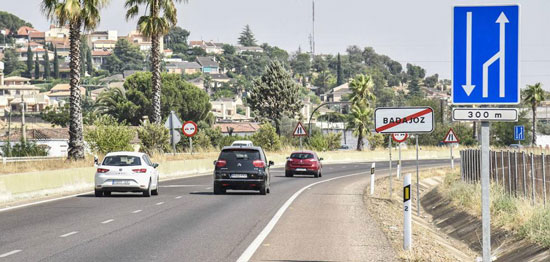
Seville is one of the most popular and crowded provinces in Spain. The vehicular movement, especially during vacations, is impressive, with cars coming and going 24 hours a day.
The good news is that the Spanish town boasts a road network in optimal condition. Its roads, highways, and byways are ideal for connecting cities, towns, and airports.
Most of these roads are surrounded by beautiful scenery that looks straight out of a movie. It’s a stunning experience to drive through the enchanting countryside of Andalusia.
In addition, these roads benefit from preventive maintenance, proper lighting, prohibition signs, and competent personnel to manage traffic.
If you are planning to visit Seville or creating a route for your trip to Andalusia, we recommend that you join us. In this publication, we will highlight the main roads of Seville.
Main roads of Seville
AP-4 Road
One of the main roads of the city is known for connecting Seville with Cádiz. It stretches for 668 kilometers and was inaugurated in 1972, alleviating vehicle congestion in southern Spain. Currently, it is one of the busiest roads; statistics show an average intensity of 17,504 vehicles per day.
It begins at Dos Hermanas and ends at Puerto Real, just 8 kilometers from the city of Cádiz. Along the way, sections such as El Cuadrejón, VillaFranca, Lomopardo, and Puerto Real can be seen.
Highway N-4
Previously known as the N-IV road, it is one of the most important routes of Seville. It spans 680 kilometers and connects Seville with the country’s capital, Madrid.
Originally, it was created to eliminate tolls on the A-4. This practice is common to promote the safety and integrity of road users. It crosses several towns, including Manzanares, Cádiz, Puerto Real, Jerez de la Frontera, Córdoba, El Carpio, and Madrid.
Highway A-49
This route is named after the Highway of the V Centennial. It connects the province of Seville with Huelva and southern Portugal. The highway is 132 kilometers long and is frequently used for travel to Portugal.
It is one of the oldest roads in Seville, with origins dating back to the early seventies. It was designed as an alternative to the old N-431 highway and crosses several sections such as Niebla/Bonaes, Castillejo de la Cuesta, Sanlúcar la Mayor, Bollullos Par del Condado, San Juan del Puerto, and Ayamonte.
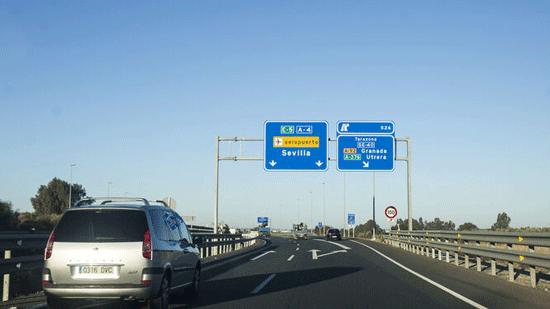
Highway N-630
The N-630 motorway, also known as The Silver Route, allows you to travel along the Silver Way—an ancient Roman road—and is one of the longest roads in Spain. Its length is 817 kilometers, designed to unite Gijón and Seville.
It starts at Puerto del Musel in Gijón and ends at the port of Seville. Along the way, it crosses several provinces including Asturias, León, Zamora, Salamanca, Huelva, Cáceres, and Badajoz.
In addition to its vehicular viability, it features beautiful panoramas of hills and extraordinary landscapes. It also experiences significant traffic, which is understandable given its connection to northern Spain.