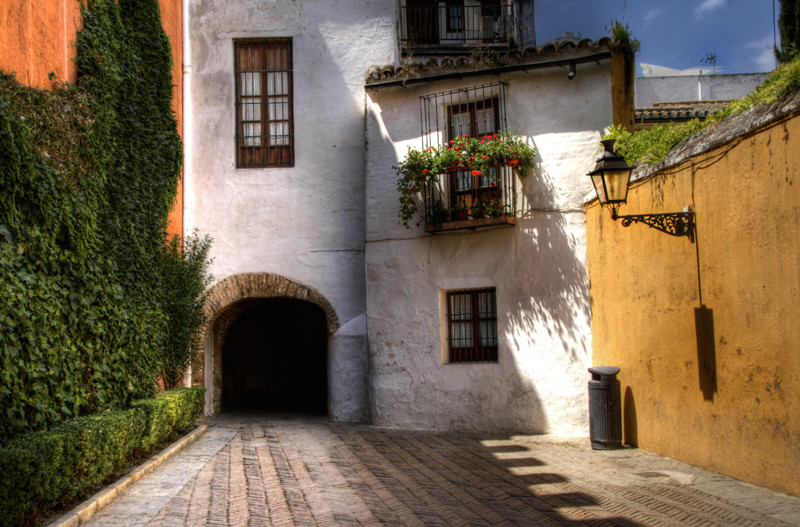
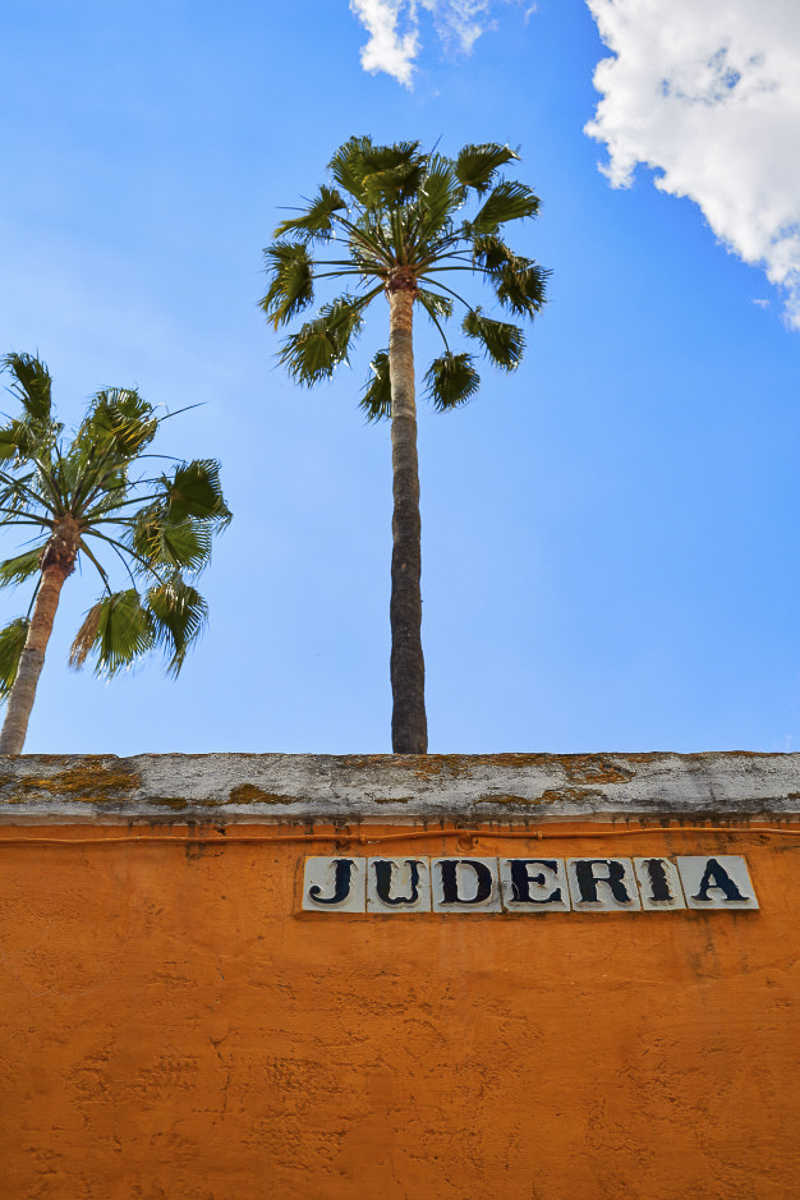
When talking about the Jewish quarter of Seville, the first thing that comes to mind for many is the Santa Cruz. This area is known for its attractive alleyways, charming corners, and a plethora of stories that breathe life into countless legends and mysteries.
However, the Jewish quarter offers much more than just Santa Cruz. In this article, we will explore various places of interest within this captivating neighborhood, helping you discover its unique character if you’re planning a visit.
Before delving into the specific sites and buildings of interest, it’s essential to review a brief history of the Jewish quarter to understand its allure.
The Jewish quarter was originally part of a much larger extension of Seville. It encompassed areas around the Church of Santa Maria la Blanca and San Bartolomé, built over mosques by Fernando III and Alfonso III, and later conferred to the Jewish community after the city was reconquered in 1248.
Places of interest that you need to know about the Jewish quarter
The Walls
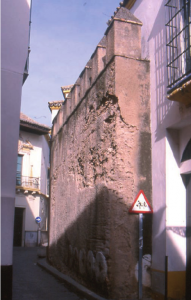
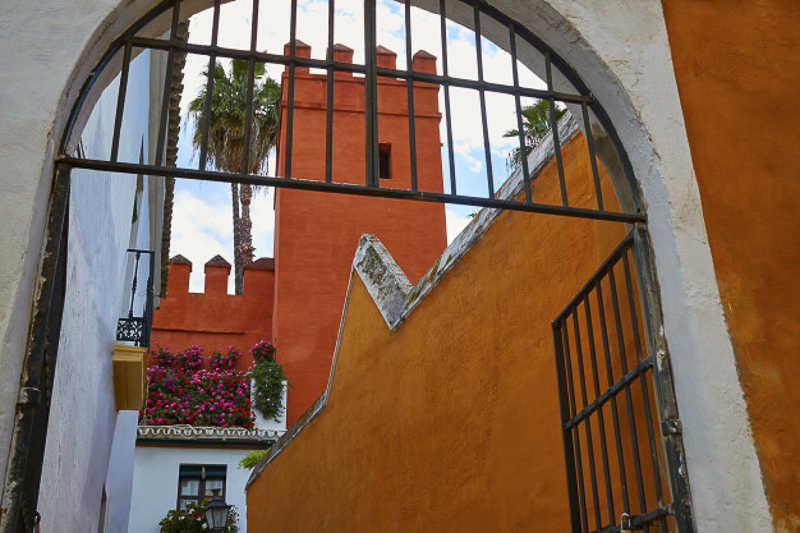
The walls of the Jewish quarter were integral to the city’s fortifications, dating back to Roman times. Although the current structure differs from its original form, it remains a testament to the historical regrowth under the Almohad leaders.
An interesting detail within these walls is the ancient water pipe system, which carried water to the Alcázar.
The Streets of the Jewish Quarter: Water and Life
Without a doubt, these streets are the most famous in the barrio de Santa Cruz. We highly recommend visiting them, even if you’re not familiar with the area.
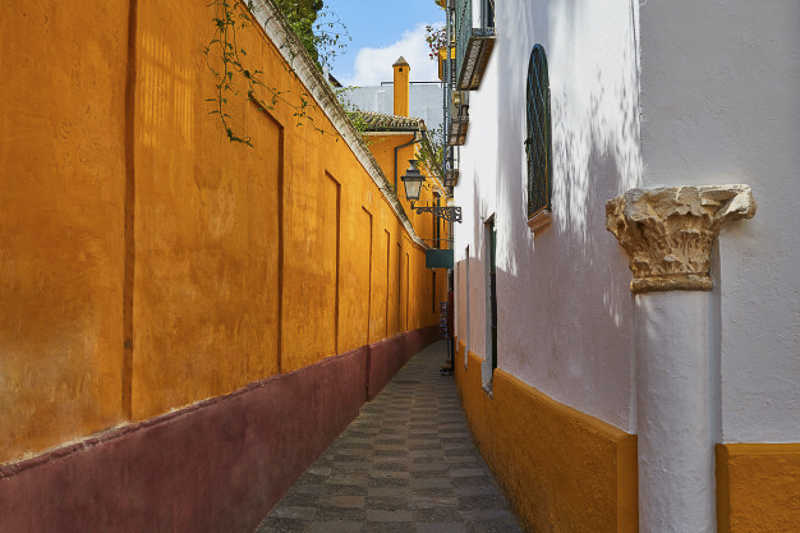
While exploring, be sure to check out the “Patio de Banderas” (Courtyard of the Flags), the royal entrance to the Alcazar, the Plaza del Triunfo, and the Cathedral. One of the highlights is strolling through the arcades, a characteristic feature of medieval architecture that allowed passage below the houses.
If you decide to visit these streets, it’s best to go during off-peak times. This way, you can experience the true tranquility and enjoy the delightful scents of the gardens’ flowers.
The Plaza de Santa Cruz
The square now known as Plaza de Santa Cruz was once home to a synagogue (until the year 1391). Later, it was transformed into the parish church of the Holy Cross, which unfortunately was demolished during Napoleon’s invasion and contained remains of the artist Murillo.
Today, you can see a wrought iron cross designed by Sebastian Conde in the late 17th century. Originally, this cross was located on Sierpes Street.
During the remodeling in the early 20th century, the cross was relocated to this square, while the nearby church was moved to the Monastery of the Holy Spirit on Mateos Gago Street.
Calle Las Cruces (The Street with Crosses)
This striking street earns its name from the crosses embedded in its walls, believed to date back to the 15th century.
At the end of this street, you will find an area with a brick pedestal and three columns adorned with wrought iron crosses, commonly referred to as the calvary of the street of the crosses.
These crosses were reportedly placed by the religious community to deter any unruly individuals or unwanted passersby from misbehaving on the street at night.
The House of the Dean Lopez
In Plaza de Alfaro, you will discover the palace of the Dean of the cathedral. The significance here lies not in the building itself, but rather in the remarkable collection housed within, boasting nearly 1,000 boxes.
In Paris, an auction was held for this collection. Even a glance at the catalog reveals intriguing items, though many carried dubious attributions. Nonetheless, numerous paintings of exceptional artistic quality can be found.
Two notable pieces from the collection include The Vision of Saint Peter Nolasco and The Apostle Saint Peter to Saint Peter Nolasco, both by Zurbarán, showcasing a remarkable level of artistry.
At the Museum of Fine Arts of Seville, you can find a painting from this collection created by Antonio María Esquivel.
Palace of Altamira
This palace was constructed following the assault on the Jewish quarter in 1391, commissioned by Don Diego López de Estúñiga. It was modeled after the Mudejar palace of Peter I.
Over the years, the palace changed hands and underwent modifications. Various families updated its architecture, adding decorative elements to suit modern tastes.
These are just a few of the must-see places in the Jewish quarter of Seville. We hope you have the opportunity to explore this marvelous neighborhood during your visit.