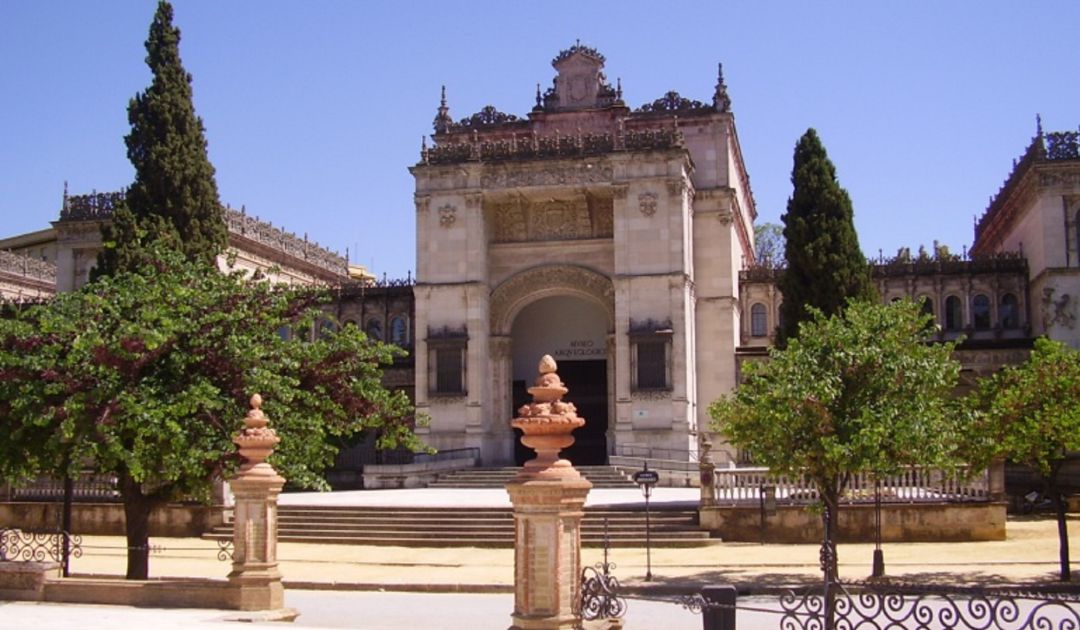
In Seville, the Archaeological Museum is located in the Plaza de America, adjacent to the Museum of Popular Arts and next to the Royal Pavilion. It is situated within the Parque Maria Luisa and occupies the former Pavilion of Fine Arts.
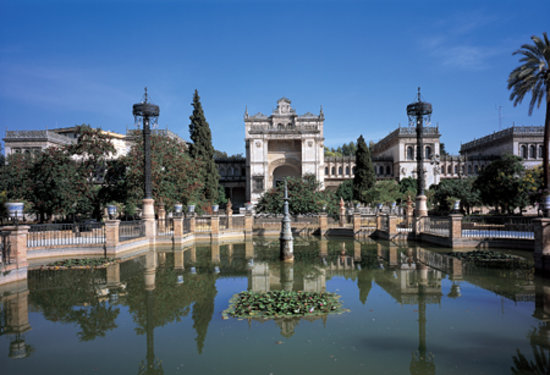
The Building: Architecture and Facade
A contest for the construction of the building was held in Seville in 1911, and won by the Sevillian architect Aníbal González. The construction took place between 1912 and 1919. This monumental project is designed in the neo-Renaissance style, similar to many other works in Seville, including those from the Latin American Exhibition of 1929. It has been referred to as the “Palace of the Renaissance”, becoming one of the most expensive buildings of its time.
The project was initially conducted by Rodrigo Gil de Hontañón and Fray Martin de Santiago for the third Count of Monterrey, Alonso Zúñiga y Acevedo, in 1539.
The Collections of the Museum of Seville
The extraordinary quality of the works and pieces that comprise the collections of the Museum of Seville ranks it among the best in Spain. The most significant remains come from the Roman and Hispanic Roman eras, primarily from Italica and, to a lesser extent, other municipalities. Due to the high conservation of some pieces, it is evident that they were outstanding during their time.
Roman Collection
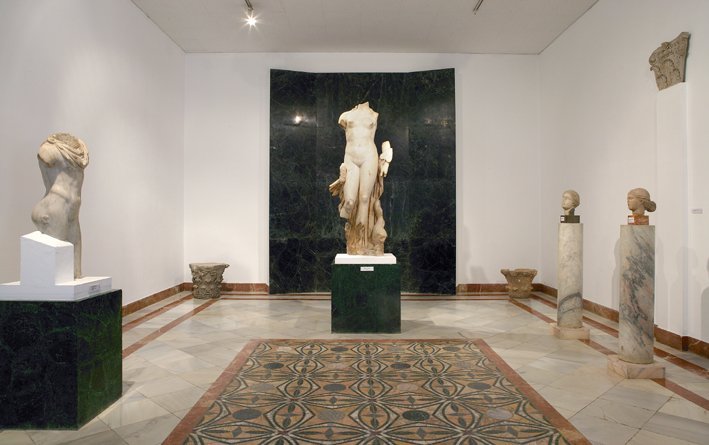
Almost the entire ground floor is dedicated to the Roman period, except for room XXVII, which hosts medieval and modern pieces. The room housing the Treasure of El Carambolo is particularly important, containing numerous notable pieces of historical and artistic value.
In room XII, notable figures such as “Niobide Wounded” and “Apollo Citharoedus” stand out among many other Roman sculptures from various backgrounds. The most important piece is the torso of the Emperor Claudius, dated to the first century, which was found in the city of Mérida.
Early Christian Parts
The few medieval pieces in the museum are remarkable for their importance and quality. They are currently divided into two rooms, separated by the chronology of the exhibits, featuring Visigoth and Hispano-Muslim artworks.
Within the funerary context, the grave of Maria Severa from the fifth century stands out.
Hispano-Visigoda Time
A notable piece from this period is a cuboid gray marble block referencing the revolt of King Hermenegildo, dated around the year 581. This piece was later moved in the seventeenth century to Cajul mill in Alcalá de Guadaira, where it was rediscovered in 1699.
Another significant piece is the Spanish-Visigoth lintel of San Hermenegildo. Among earlier pieces, a Visigoth foot of the altar, dated to the VI-VII centuries, is notable. Its origin remains uncertain, possibly from either Sevilla or Córdoba.
Additionally, a unique piece is the tenante, a container for the relics of a martyr, which forms part of the liturgical furniture. Unfortunately, the loculus atop the piece is missing, which would have housed the relics.
The relief decoration features motifs such as rosettes and crosses, characteristic of the emeritense model, along with influences from Córdoba and North Africa. One case features a faithful reproduction of crosses and jewelry from the famous Visigoth treasure of Torredonjimeno (Jaén), discovered by a peasant in 1926.
Muslim’s Time
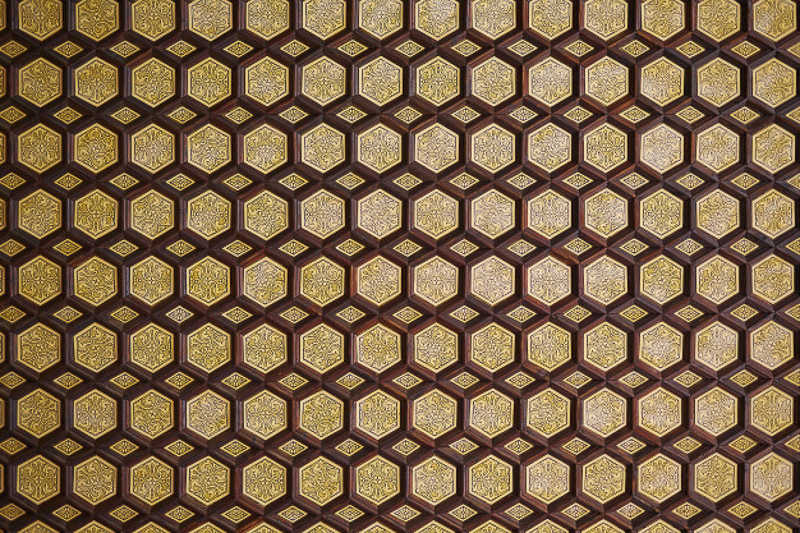
In the halls dedicated to Muslim archaeology and art, one can admire various columns, capitals, reliefs, and pieces of glazed curbstones. Highlights include:
- Capitals and Columns: The museum showcases a variety of capitals from the Caliphate period, spanning from the time of the Muslim rulers in Sevilla to the Christian conquest by King Ferdinand III in 1248. A remarkable exhibit is the column of Ibn Abbas, a Roman piece from the third century, which was reused in the ninth century in the early congregational mosque, now the Church of the Savior.
The column’s smooth shaft is adorned with engraved symbols and is notable for featuring some of the oldest Arabic inscriptions in the Iberian Peninsula, referring to the mosque’s foundation and its founder.
Wording
In the Archaeological Museum of Seville, one of the stone tables maintains significant historical and social value, as it belongs to an epitaph of a woman from the Cordoba Moorish community, who died at the end of the tenth century, during the last stage of the Caliphate.
Brocales Well
The museum also houses a parapet dating to the tenth or eleventh centuries, illustrating the importance of water in Islamic culture. This octagonal piece, crafted from white marble and originating from Sevilla, features a characteristic braided molding along the edge, with a smooth surface.
Another notable piece, made of clay and covered in green glass, comes from Calle San Luis, dating from the Almohad era (1147-1248).
Miscellaneous Parts
Several religious origin pieces from the Almohad period are also on display, including an admirable rectangular ablution basin from the Caliphate, dating to the tenth century. This piece features aquatic animals, birds, and amphibians such as fish and turtles, intricately carved alongside fleshy leaves.
Among the pottery jars, two well-preserved large pieces feature spectacular decorative glazes with horseshoe arches and various arabesques.
Middle Ages Christian
During the Middle Ages, specifically between the twelfth and thirteenth centuries, the museum showcases a polilobulado Moorish arch, a semicircular arch decorated on one side. This arch, belonging to the Almohad tradition, features an iconography of the raised hand of Fatima on one side and a plant decoration on the other. Its origin remains unknown, possibly from Sevilla.
Indispensable Visit: Treasure of the Carambolo
In addition to its magnificent archaeological and artistic repertoire from Roman times, another highlight of the Seville museum is the Treasure of the Carambolo. This magnificent collection consists of 21 pieces of gold (25 carats) crafted during the Phoenician period (VIII-VI centuries B.C.).
Currently, the original pieces are securely stored in a bank, while replicas created by local Sevillian goldsmiths are on display.
Useful Information: Museum of Seville
Admission to the Archaeological Museum of Sevilla is FREE for EU citizens. For visitors from other countries, the entrance fee is only 1.50 euros—making it a convenient visit to this monumental building, rich in history and Spanish culture.
Opening Hours of the Archaeological Museum of Seville
Winter (from September 1 to June 30):
- Tuesday to Saturday: 9:00 AM - 9:00 PM
- Sundays and holidays: 9:00 AM - 3:00 PM
Summer (from July 1 to August 31):
- Tuesday to Sunday and holidays: 9:00 AM - 3:00 PM
Visitors from the European Union pay the same admission price of just 1.50 euros.
How to Get There?
Nearby stops are a delight to walk to. The museum is 359 meters from Palmera’s Avenue, 372 meters from Guatemala’s Pavilion, and 505 meters from De La Borbolla’s Avenue.
There are multiple stops within a 5 to 10-minute walk from the Museum of Seville. The nearest subway lines are L1, and the train to take is C1. For those who prefer bus travel, routes 1331, 1340, 1531, and 30 are available.