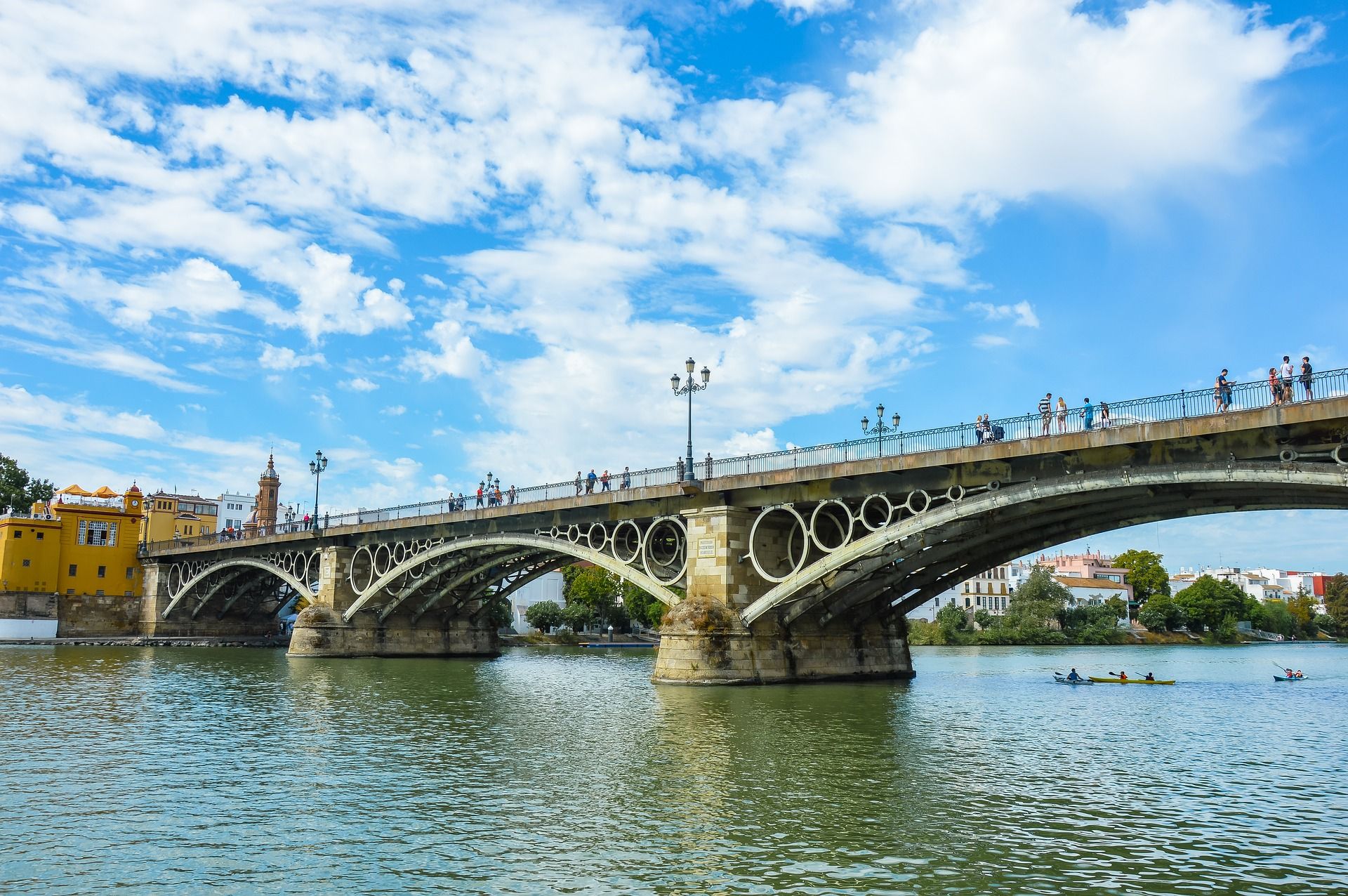
The Triana Bridge, officially named the Bridge of Isabel II, is located in the city of Seville, linking the neighborhood of Triana with the city center. Its construction was completed in 1852 during the reign of Queen Elizabeth II, which is why it bears her name.
Countless visitors capture photos on the Triana Bridge in Seville, but few know the many anecdotes that make this bridge such a special place.
Here are 7 trivia about the history of the Bridge of Triana that will surely change your perspective when you visit Seville.
The Triana Bridge was inspired by a Paris Bridge
The engineers Ferdinand Bennetot and Gustavo Steinacher were commissioned to construct the Triana Bridge between 1845 and 1852.
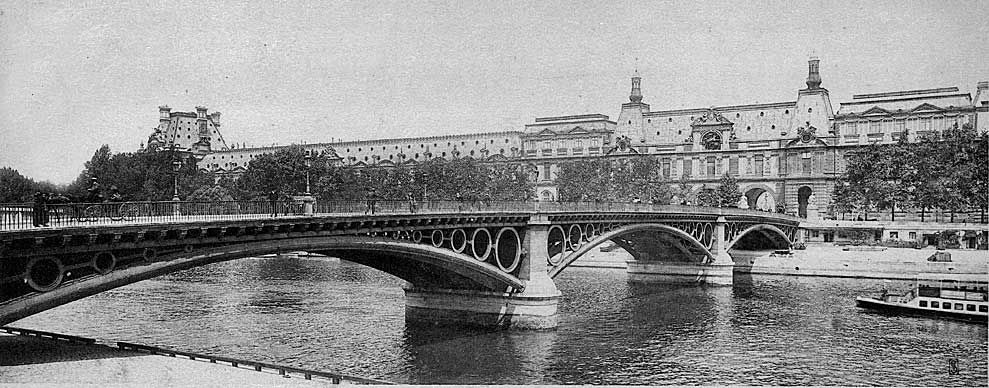
It was inspired by the Parisian Bridge of the Carrousel, which was built in 1834 under the command of King Luís Felipe by engineer Antoine Remi Polonceau. This bridge was later replaced by a more stable structure in the 1930s.
The Triana Bridge replaced the Bridge of Boats
The Bridge of Boats occupied the location of the Triana Bridge and was the stage for the well-known Battle of Triana, which took place during the War of Independence from Spain (1808-1814).
In this battle, Spanish troops, supported by English forces, clashed with the invading troops of Napoleon Bonaparte. The victory ultimately fell to the Spanish army.
The oldest iron bridge preserved in Spain
The Triana Bridge is considered one of the major milestones of iron architecture in Spain, featuring a distinctive design reflective of the Nineteenth century.
It is the best-preserved bridge of its kind in the entire Iberian Peninsula. The materials used for its construction came from a foundry in Seville established by Narciso Bonaplata in 1840.
An opening across the top
The Triana Bridge was inaugurated on February 23, 1852, celebrated with a procession that started from the Parish Church of Santa Ana.
Present at the opening were the archbishop, who blessed the new structure, along with the civil governor and captain general of Seville. The day was declared a holiday by the Town Hall and included a military parade, marking the bridge’s significant entry into history.
The Triana Bridge was about to collapse
In 1889, the collapse of a steam cylinder led to the breaking of a stringer and a joist on the Triana Bridge.
Consequently, a decision was made to undertake repairs that cost a staggering 35,000 pesetas, a considerable fortune at that time.
The statue of Isabel II that never existed
During the 1850s and 1860s, there were plans to decorate the Triana Bridge with a statue of Queen Isabel II. However, the Revolution of 1868, which resulted in the monarch’s exile, put an end to this project.
A National Historic Landmark
The Triana Bridge was declared a National Historic Landmark in April 1976. However, long before this designation, it had already become an iconic place for locals and a must-visit for tourists.
The Triana Bridge is one of the many treasures located near the Torre del Oro, which you cannot miss on your next escape to the Andalusian capital. Be sure to take plenty of photos to capture all the wonders it offers!